
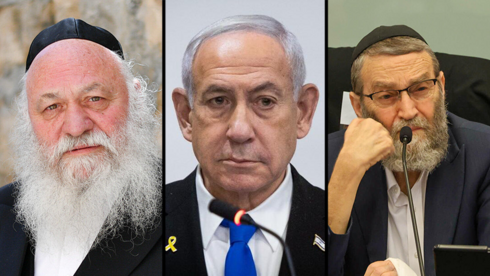

Prime Minister Benjamin Netanyahu has shifted his approach to the ultra-Orthodox parties after the Supreme Court invalidated legislation that would have frozen the prosecution of draft evaders. Having previously acquiesced to the religious parties’ demands in parliament, Netanyahu is now taking a tougher stance, signalling a significant change in the government’s positioning on this contentious issue.
The political agreement had appeared settled when Netanyahu agreed to the ultra-Orthodox demands as part of coalition negotiations. However, the Supreme Court’s rejection of the law to halt prosecutions of military draft evaders has forced a recalculation. The legislation, which would have exempted hundreds of yeshiva students from military service, was deemed unconstitutional by the court.
In response to the court ruling, government sources have begun distancing themselves from their previous commitments. One senior coalition member suggested the ultra-Orthodox parties face a choice: accept the government’s revised position or return to opposition. The comment reflected tensions within the coalition, with some accusing Netanyahu of initially employing “spin” to sell the arrangement to parliament.
The dispute underscores the fragility of Netanyahu’s coalition and the competing pressures he faces between appeasing his ultra-Orthodox partners and navigating Israel’s judicial system. The prime minister previously made military draft equality a central demand, having spent four years emphasising judicial reform and constitutional change whilst in opposition. Coalition members are now warning that a government built on these principles cannot simply revert to earlier compromises on such fundamental issues.
Related: ultra-Orthodox immigration debate
Source: Ynet — Original article in Hebrew.

 © 2026 News In Israel - Israeli News In English. All Rights Reserved.