
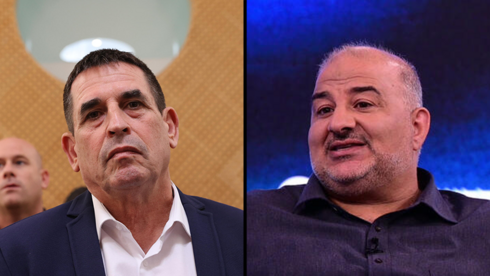

Israeli politics has reached a critical juncture where fundamental changes in coalition dynamics and party integration are overdue. The time has come for Jewish politicians to join Ra’am, the Arab-Islamic party, thereby legitimising it in the eyes of a broader swathe of the population. Such a move would represent a genuine crossing of the Rubicon—a point of no return that would reshape how political blocs are constructed in Israel.Simultaneously, ultra-Orthodox politicians should begin integrating into non-sectarian parties rather than remaining confined to exclusively religious political movements. This integration would serve multiple purposes: it would broaden the appeal of mainstream parties, reduce the isolation of the ultra-Orthodox community from Israeli society, and diminish the mutual alienation that has long characterised Israel’s political landscape.The current system, in which political movements remain largely segregated along ethnic and religious lines, perpetuates a fragmented parliament where cooperation is transactional rather than transformative. By breaking these traditional barriers, Israeli politics could move towards a more inclusive model where shared policy interests supersede communal divides.Such structural changes would not happen overnight, nor without resistance from those invested in the existing order. However, the long-term stability of Israeli democracy may depend on whether its political class is willing to take these bold steps. Without genuine integration across traditional dividing lines, the fundamental divisions within Israeli society risk becoming permanently entrenched.
Source: Ynet — Original article in Hebrew.


 © 2026 News In Israel - Israeli News In English. All Rights Reserved.