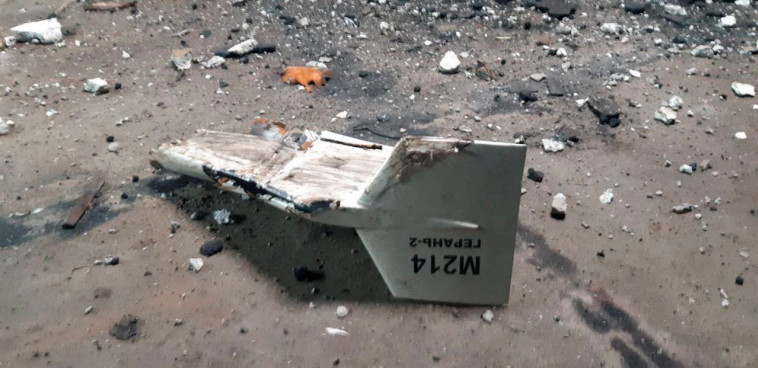

In the shadow of reports that Iran continues to supply drones to the Russian army fighting in Ukraine, a new study published today (Friday) revealed that those unmanned aerial vehicles are powered by technology illegally purchased from the West. In a study published on the CNN network, it appears that the Conflict Armament Research Organization (CAR ), based in Great Britain, checked and determined that the Shahad-136 drones used by Russia are based on German technology, which was bought by Tehran illegally about 20 years ago.
For the Russians, the use of Iranian drones is critical to the continuation of fighting on the battlefield in Ukraine. This, after Western officials reported that the missile depots of the Russian army are being depleted, and that those unmanned aerial vehicles are a cheap substitute. Experts estimated that the price of a Shahad-type drone -136 costs about 20 thousand dollars, an amount significantly lower than the cost of a single cruise missile.
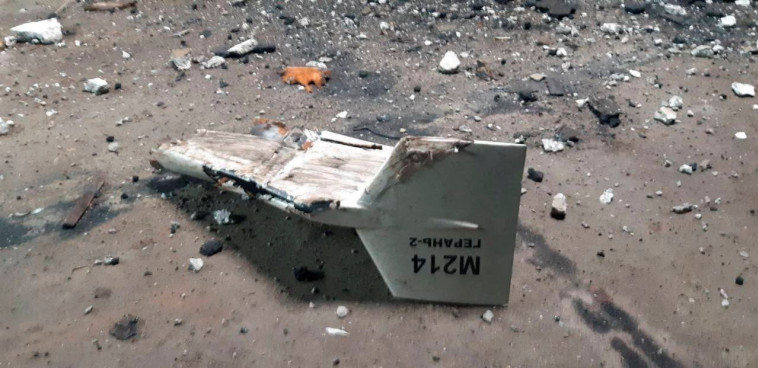 An Iranian drone shot down in Ukraine (Photo: Press service of the Ukrainian Armed Forces/Handout via REUTERS)
In the meantime, the CAR organization was able to test components in 20 different Iranian-made drones, about half of them of the Shahad-136 type. The organization was able to confirm that the engine in the same aircraft was "reengineered" by an Iranian company called Oje Parvaz Mado Nafar, known as Mado , which was sanctioned by the US, the UK and the EU. According to the organization, the company plays a crucial role in the drone industry in Iran, and its products even reach other places and organizations, such as the Houthis in Yemen.
The engine found in the Shaheed-136 points to an Iranian effort lasting about 20 years to acquire Western technology for its unmanned aerial vehicles. According to the study, in 2006, Iran illegally purchased UAV engines from the German company Limbach Flugmotoren, and three years later, an Iranian engineer by the name of Youssef Abutalbi, surprisingly announced that the Mado company had succeeded in building its own UAV engine. The study's investigators discovered that original serial numbers that appeared on the engines had been erased, in an apparent effort to disguise their origin.
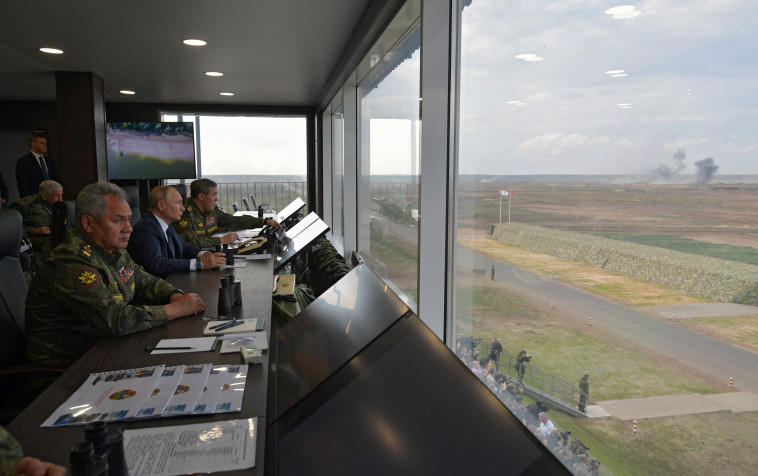 Vladimir Putin, Valery Gerasimov (Photo: Reuters)
Among other Western components that were illegally purchased and copied by Iran, Czech-made missile parts were also found. A 2020 UN report showed that the engine in Iran's Qods-1 missiles was "copied" without a license from a TJ100 jet engine manufactured by a Czech company called PBS, and experts claim that the Czech engine was also copied on additional Iranian missiles.
As mentioned, the sale of drones between Iran and Russia deepened the relations between the two countries. The Iranian finance minister was interviewed last month by the "Financial Times" and said that "we define our relations with Russia as strategic relations and we work together in many aspects, especially in the economic aspect."
Last February, the Wall Street Journal reported that Russia and Iran are advancing plans to establish a new factory for the production of drones on Russian soil. According to the report, this is a factory that will be able to produce at least 6,000 Iranian-designed drones. According to the sources quoted in the American media, a high-level Iranian delegation landed in Russia at the beginning of January to visit the site where the factory is planned to be built, in order to finalize the final details before the project is implemented.