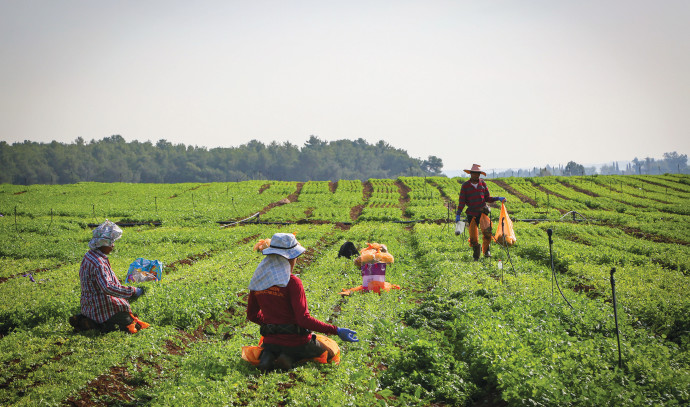

The value of the total output of agriculture in 2022 was approximately NIS 34.9 billion. An increase of about 7.6% compared to the year 2021. This was stated by the Central Bureau of Statistics, which published data on agriculture in Israel. The segmentation shows that the value of animal output (mainly cattle, sheep and poultry) increased by about 12.4% and the value of plant output increased at a more moderate rate – about 4%.
On the other hand, the amount of output of vegetables, potatoes and maksha decreased last year at a rate of about 8.8%, following the increase in imports and the year of the shemita. The value of the agricultural input (including wear and tear) last year was about NIS 21.8 billion – an increase of about 12.6% and the prices of the agricultural input increased by about 10.9%.
The value of agricultural exports last year amounted to about NIS 4.3 billion – an increase of about 2.9%. In the value of energy inputs there was a sharp increase of about 21.2% and in the price of energy inputs there was a jump of about 29.6%. There was also a sharp increase in the value of fodder by about 20.3%, against the background of the war between Russia and Ukraine, and its price increased by about 17%.
The summary of the CBS data also shows that the amount of agricultural produce increased by approximately 6.7% and the amount of field crops increased sharply by approximately 23.5%. The amount of fruit (excluding citrus fruits) increased by approximately 15% and the amount of citrus fruit increased by approximately -13.8%
The CBS also noted that there was a sharp jump of about 140.3% in the amount of oranges and an even sharper jump in the amount of cotton (fibers and kernels) – about 239.9%. Sharp increases were also recorded, among other things, in the amount of peaches – about 71.6%, in the amount of grapefruits – about 37%, in the amount of wheat – about 35.5%, in the amount of field strawberries – about 29.7%, in the amount of dates – about 21%, in the amount of avocado – about 14.9% and in the amount of hay – about 12.3%.
On the other hand, there was a decrease of about 16.9% in the amount of watermelons and decreases were also recorded in the amount of carrots – 13.9%, cucumbers – about 13.8% and pomegranates – about 7.8%. Against the background of the year of omission and importation, there was a decrease of about 27.5% in the amount of new plantings, of which the decrease stood out in plantings of subtropical fruits – about 36.6%, in plantings of young citrus fruits – about 17.9% and in plantings of young wine grapes – about 16.4%.
There was a quantitative increase of about 2.2% in the output of the sea leaves. The segmentation shows that there was a sharp increase in the amount of goat meat of about 30.4%, in the amount of honey there was an increase of about 12.5%, in the amount of goat milk – about 8.3% and in the amount of beef for slaughter – about 4.6%.
On the other hand, there was a decrease of about 14.7% in the amount of pigs. In the amount of agricultural exports, which recorded a total increase of about 3.7%, the jump stood out in the amount of exports of cotton fibers – about 232.2%, in the export of spice crops, medicine and perfume – about 36.1%, in the export of persimmons – about 27.6%, in the export of avocados – about – 23.3% and in grapefruit exports – about 12.7%.
On the other hand, there was a sharp decrease in the amount of pepper exports of about 38.6% and decreases were also recorded in the export quantities of carrots – about 14.4% and potatoes – about 8.1%. 38.6% of the total value of agricultural production was sold to the local market – 40.1% to industry, 12.3% to export and 9% to supply intermediate products.