


This is an initiative designed to forge an alliance between countries that share worldviews and values of freedom and democracy, and that seek to deepen cooperation between them in a number of areas: combating Iranian terrorism, combating drug trafficking, coordinating in international forums, strengthening trade ties, and promoting cooperation in the fields of technology and innovation. Israel estimates that further countries from the Americas are expected to join this framework.

From Israel's perspective, this is not just another ceremonial title intended to accompany a visit by a sympathetic leader. In Jerusalem, this move is seen as an attempt to provide a permanent framework for broader political transformations that have been taking place in Latin America in recent years – the strengthening of governments and political currents that seek to move closer to Israel and the US, adopt a firmer line against Iran, and distance themselves from the cautious diplomatic tradition that has characterized some of the region's countries in the past.
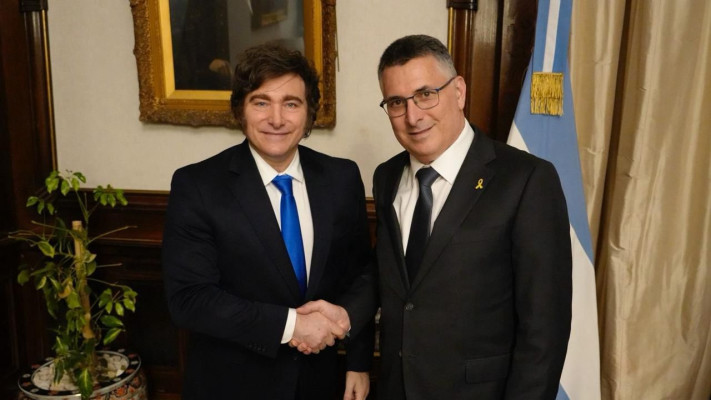
One of the key junctures in advancing the move was Foreign Minister Saar's visit to Washington in August, when he raised the issue in a meeting with Marco Rubio. At that meeting, it was agreed to establish a joint working group between Israel and the US on the subject of Latin America. Later, in February, the joint working group met in Jerusalem, together with a senior official from the State Department, to advance the issue and examine additional cooperation on the continent.
In this sense, the Isaac Accords are not just a bilateral initiative by Israel and Argentina, but an attempt to build a broader regional platform, with American backing, that can serve several goals simultaneously – expanding the circle of countries friendly to Israel, building a political axis against Iran and its proxies, creating closer coordination in the international arena, and deepening economic and technological ties with countries that are currently seeking a clearer alignment with Washington and Jerusalem.
For Milley, this move fits well with the line he has been leading since taking office. The Argentine president presents himself as someone who seeks to place his country at the heart of the Western, pro-American and pro-Israeli camp. Therefore, for him, the Isaac Accords are both a political move and an ideological statement – an attempt to lead a new, more distinct camp in Latin America, one that defines itself through support for Israel, confrontation with Iran, and a discourse of freedom and democracy.
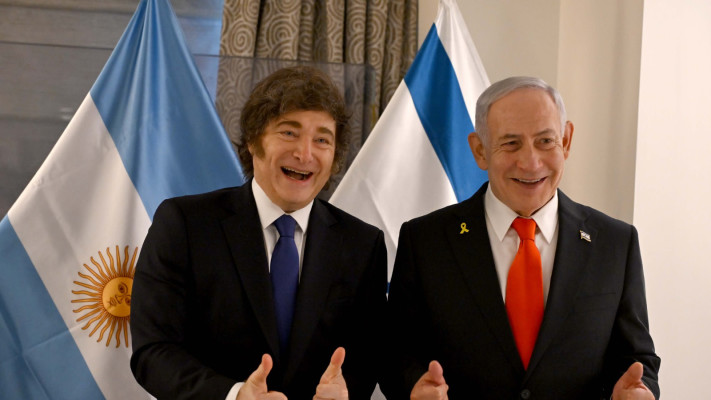
For Israel, too, the timing is significant. Against the backdrop of growing international pressure and the ongoing war, Jerusalem is looking not just for gestures of support, but for new policy frameworks that will create strategic depth. The Isaac Accords, if they do expand beyond Israel and Argentina and succeed in attracting additional partners, could become an important diplomatic tool in an arena where Israel now has new opportunities.
The central question, of course, is what will come of this declaration in practice. For the Isaac Accords to transform from an intriguing political expression into a meaningful alliance, they will need to move quickly from declarations to practical mechanisms – political coordination, joint forums, security cooperation, trade moves and tangible steps in the international arena. In Jerusalem, they would like to see this move as the beginning of a new axis between Israel and key countries in Latin America. Milley, for his part, wants to be portrayed as someone who not only approaches Israel, but also brings with him a broader regional vision.
Foreign Minister Gideon Saar recently spoke at an event attended by Prime Minister Netanyahu and Argentine President Milley at the Prime Minister's Office in Jerusalem. Speaking. "We want to thank you, President Milley, for your leadership and the fresh spirit you have brought not only to your country, but also to the struggle of those who believe in the values of the free world around the world and in Latin America. We are facing incredible progress in our bilateral relations. And today we celebrate two great achievements.
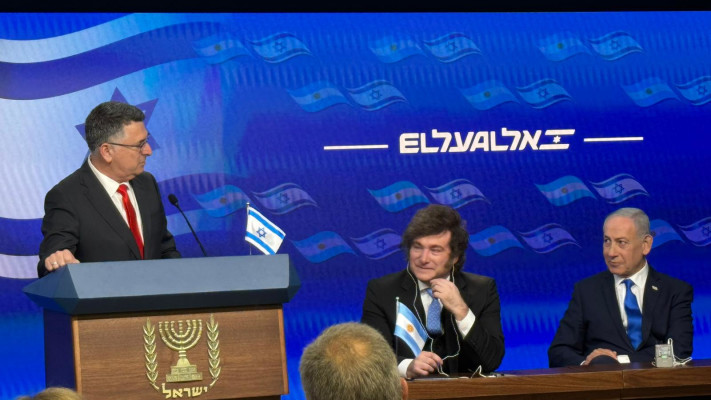
"We are signing an agreement to combat terrorism, and it is time to say that Argentina, under your leadership, is introducing a moral dimension to foreign policy. And this is reflected in the declaration of the Quds Force and the Revolutionary Guards as terrorist organizations. And it is clear that we need to cooperate."
"Usually in my work I ask Foreign Minister Pablo Quirno, and from you and from Argentina, I call every now and then to ask for something. So I want to give you advance notice of another request, about three months before July, please bring the fourth trophy to Argentina in the World Cup."
Israel and Argentina signed two memoranda of understanding: cooperation in the fight against terrorism and artificial intelligence
Israel and Argentina signed two memoranda of understanding for cooperation in the fight against terrorism and in the field of artificial intelligence, as part of the strengthening of relations between the countries and in the wake of the visit of Argentine President Javier Milley to Israel. The agreements were signed by Foreign Minister Gideon Sa'ar and Argentine Foreign Minister Pablo Quirno, and they entered into force immediately upon signing.
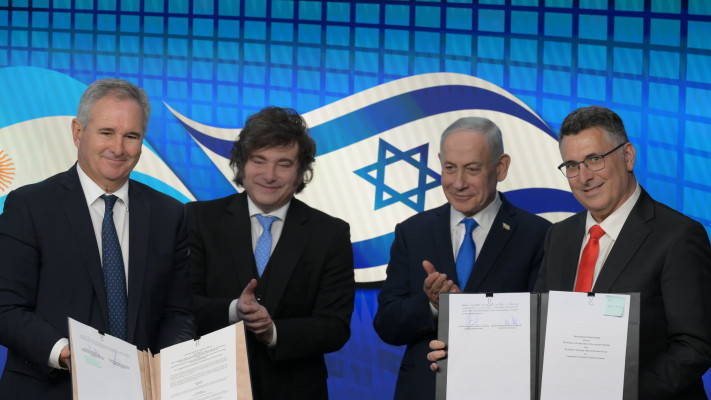
The first memorandum, in the security field, defines joint practices for combating terrorism, and includes nine articles. According to the text of the understandings, its purpose is to "contribute to the prevention and suppression of terrorist activities, to the fight against extremism and the ideology that fuels it, recognizing the countries' shared concern about the rise in acts of terrorism and extremism and the importance of addressing them."
The agreement includes cooperation against various forms of terrorist activity, including terrorist financing, global jihad, weapons proliferation, misuse of technologies and cyber tools, as well as other areas related to threats developing in the international arena. It was also determined that the cooperation between the countries will include, among other things, training and capacity building for law enforcement agencies and security forces, sharing and exchanging information and expertise, holding working meetings and consultations, courses, professional gatherings and training programs.
As part of the memorandum, a joint working group will also be established for the two countries, which will be authorized to promote and implement the issues stipulated in the agreement. The group is expected to meet on fixed dates that will be agreed upon in advance.
In addition, the parties also signed a Memorandum of Understanding for Cooperation in the Field of Artificial Intelligence, between the National Artificial Intelligence Headquarters in the Prime Minister's Office and the National Secretariat for Innovation, Science and Technology of Argentina. The purpose of the agreement is to deepen the ongoing alliance between the countries by promoting cooperation in the field of AI. According to the understandings, the partnership will focus on supercomputing infrastructure, the application of artificial intelligence in critical civilian sectors, human capital and joint research. According to the wording of the understandings, the memorandum is intended to deepen the ongoing alliance between the countries through cooperation in the field of artificial intelligence.
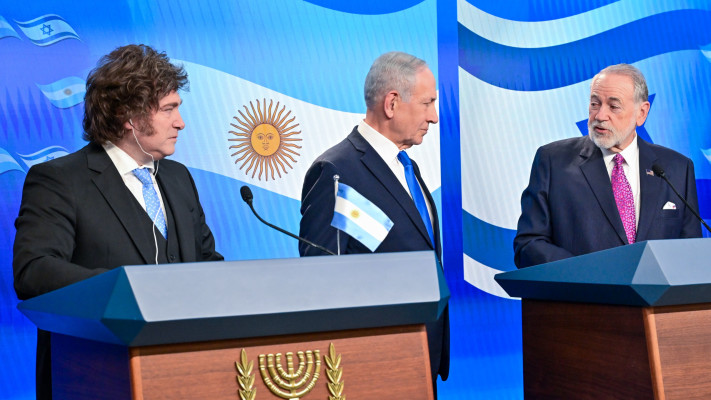
Prime Minister Benjamin Netanyahu and Argentine President Javier Milay announced the "Yitzhak Accords"
The Prime Minister's words: "I mentioned the United States, Israel and Argentina, but there are others who are also fighting for freedom. We look with great hope to Latin America. We see the seeds of change, and we certainly see great change in Argentina. I think this is a compass and a map for other countries, not only in terms of domestic reforms but also in reforms in foreign relations, and it brings us back to the alliance of freedom. It starts with both of us, with the United States' continued support for free societies.
"I very much hope that the model of the Abraham Accords between countries in the region that aspire to promote peace, prosperity and security can also happen here in relation to our common goals, the principles we share in Latin America. And it starts here. This is where we are getting closer. We had Abraham, we had Isaac, what will the Jacob Accords be? I'm thinking about it right now. But we will have time to promote that too. This is the first step."
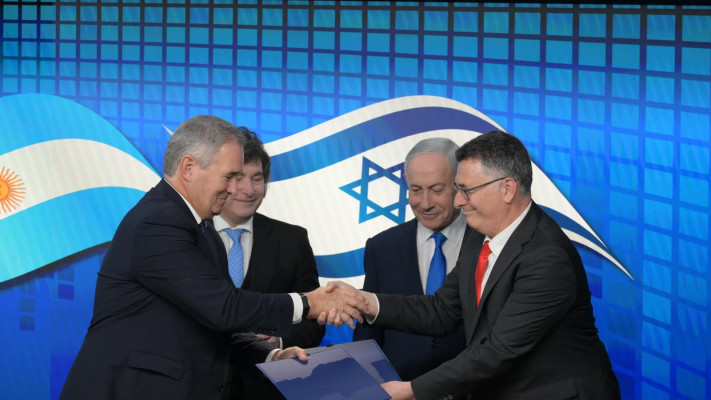
"Another pleasure I have in public life, and there aren't many, is to take a machete and cut through all the bureaucracy. And what we've done here is reduce Israeli bureaucracy to nothing. We've now delivered free navigation that was unimaginable, a direct flight between Israel and Argentina, and we've cut through all the layers of bureaucracy. I would like to thank all the people here who brought this about, and there will be more."


 © 2026 News In Israel - Israeli News In English. All Rights Reserved.