

There is a long list of skills that appears in studies both by the Ministry of Education in Israel, as published by the chief scientist, and up to lists of required skills as published in the world, for example, in corporate finance (model p21), in universities in finance of large corporations (ATC21S) is considered more academic (on behalf of University of Melbourne with corporate funding) as well as the National Research Council of the National Academy of Sciences of the United States (NRC).
The skills document of the 2030 graduate figure, issued by the Ministry of Education, is the product of a comprehensive research work, the purpose of which was, among other things, to map core skills and abilities that will prepare the graduates for the changing world of work, so that they can reach their potential, take responsibility and reach achievements.
Already in schools they teach how to write an argumentative paragraph, how to present a reasoned argument and even how to conduct a debate (personally and as part of a group) convincingly with intelligent and syntactically correct use of words, how to present a topic and/or presentation, and deliver them in front of the class. Also encouraged is participation in a conversation or discussion as part of standing in front of an audience, preparing responses to the text, collecting information and organizing it, creating a text to be used for conversation or writing, using knowledge to convince a specific target audience through the use of linguistic knowledge as well.
 Attorney Sharon Har Zahav (photo: private)
And how is it different from the world of work? Not much.
Over the ages dozens of famous speeches have been made, often changing the face of history. We will list five of them:
The famous obituary of Julius Caesar
A Roman ruler, Julius Caesar, was assassinated by a group of conspirators, as they believed he was planning to become a dictator. After a few days his funeral was held, Marcus Antonius, Caesar's assistant, asked the conspirators, who had taken over the city, to deliver a eulogy. They were wrong – and agreed. He was standing on the steps of the Capitol (the Roman parliament building) holding the body of Caesar in his hands.
William Shakespeare put the eulogy in Antony's mouth, which is probably the most famous eulogy in history, and opened with the following sentence: "Friends, Romans, citizens, bow to me and I will hear you, I have come to bury Caesar, not to praise him." The orator reviewed Caesar's actions for the people, and ended each paragraph with the cynical sentence: "But Brutus and Cassius – the chief conspirators – are men of honor." The effect of the speech was immediate: the crowd stormed the houses of the conspirators and rallied for the rule of Julius Caesar's men. The play of this name became one of the most famous in the history of the theater, was performed countless times, became a successful film and established the status of the actor Marlon Brando (=Antonio) as a superstar in the film industry.
Additionally, one can learn a thing or two about risk management from the conspirators' agreement to approve the eulogy.
Abraham Lincoln's Gettysburg Address
At the height of the Civil War in the United States, the President, Abraham Lincoln, traveled by train to the city of Gettysburg, to dedicate a cemetery to the soldiers of the Northern Army. By way of writing, on a plain envelope, a speech between 270 words, two minutes. The speech, which at first was not properly appreciated, became the basis of American democracy. He spoke about the goals of the war, first and foremost equality for all citizens. Then he said that the government "belongs to the people, for the people and in the hands of the people". His speech is still included in literature and history textbooks and is considered the most important speech of an American president.
The speech that is equivalent to several divisions of Winston Churchill
June 4, 1940. After about a month of fighting, the German army defeats the French army, which is considered the strongest in the world. German divisions sweep across France, beat the great army, reach the shores of the English Channel and threaten – for the first time in history – to invade England and conquer it. The British army that came to France barely manages to escape and return to England, but without the heavy weapons that fell into the hands of the Germans. The British public is very anxious.
The new Prime Minister, Winston Churchill, stands in Parliament in London and reviews the war situation. Towards the end, he says the historic sentences: "If large parts of Europe also… have fallen or will fall under the rule of the Gestapo… we will not be deterred and we will not be disillusioned. We will continue to the end. We will fight in France… we will fight for days… We will fight with increasing confidence and with great strength in the air we will defend our island. We will fight on the beaches. We will fight in the airfields. We will fight in the fields. We will fight in the mountains and we will never surrender!” Later, heads of state and many others said that every speech by Churchill, and there were several more in those days, was equivalent to several divisions.
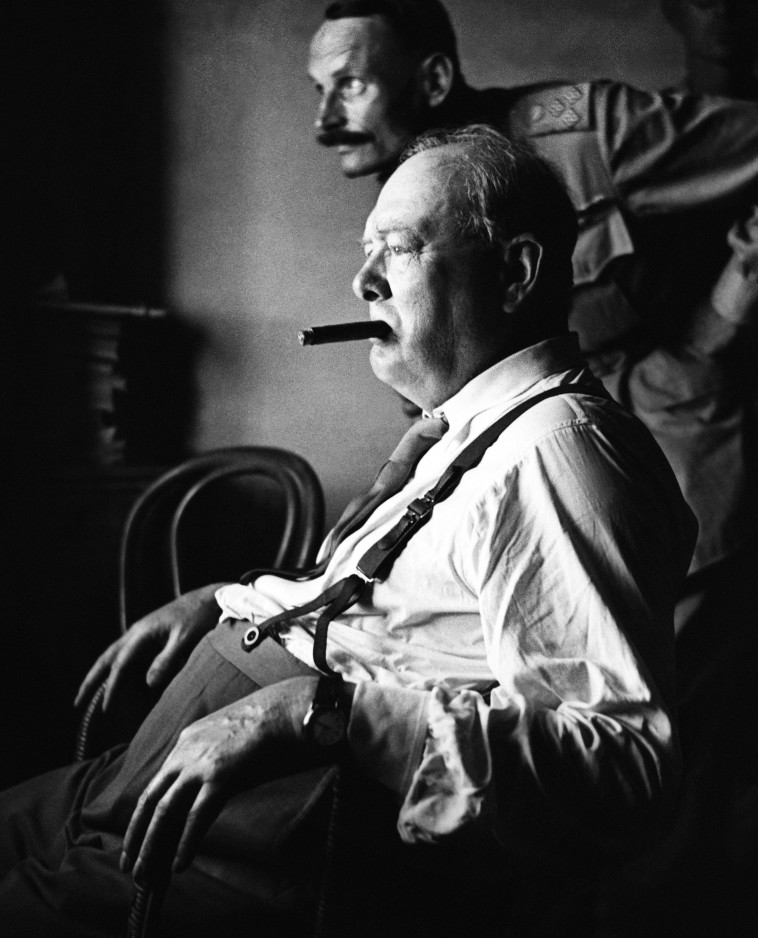 Winston Churchill (Photo: AFP)
The prosecution speech for Gideon Hausner's "Six Million Categories".
At the age of 45, attorney Gideon Hausner was appointed the government's legal advisor. His tenure, which was supposed to be routine, unexpectedly turned into a tumultuous one in May 1960, when the Nazi criminal Adolf Eichmann was captured in Argentina by the Mossad and transferred to Israel. Prime Minister David Ben-Gurion decided to put him before An apparently normal criminal trial, and Ozner was appointed the lead prosecutor.
On April 16, 1961, the eve of the opening of the trial, Hausner sat in his home in Jerusalem and worked on preparing the opening speech. The detailed speech was prepared, but Hausner searched for some opening sentences, during the night, after several attempts, he came up with the idea of saying that he was the representative of all the murdered.
This is how, the next morning, he began his historic speech, which will be remembered for generations: "In this place, let me stand before you, judges of Israel, to teach a category about Adolf Eichmann, I do not stand alone. Six million categories are standing with me at this hour. But they will not be able to stand on their feet , to point a damning finger at Eichmann, and cry out: I blame! Because their dust was piled up between the hills of Auschwitz, in the fields of Treblinka, washed in the rivers of Poland and their graves are scattered across Europe. All over Europe. Their blood cried out, but their voices will not be heard. I will be here and tell you the indictment on their behalf the terrible".
Be careful with your tongue! Begin's chachachim speech
In June 1981, Israel is on the eve of Knesset elections. The Alignment party, which has been in the opposition for the past four years, has a considerable advantage over the Likud, which heads the government. On June 27, three days before election day, the actor Dodo Topaz delivers a speech at Malki Israel Square in Tel Aviv to a crowd of thousands mocking the Likud voters: "It's a pleasure to see this crowd – the supporters of the formation – and to know that there are no chachachaks here who are ruining the elections . They are sitting in Ze'ev Citadel (the Likud offices). They were Shin Gimelim, if they went to the army at all."
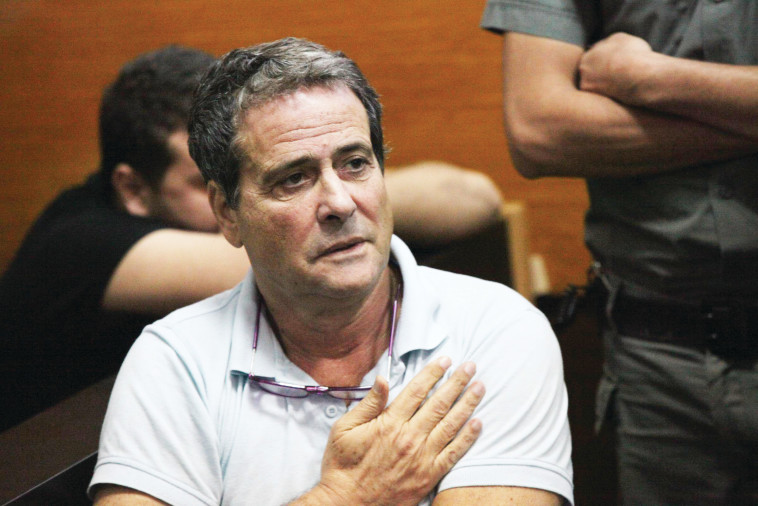 Dodo Topaz (Photo: Chen Galili)
Prime Minister Menachem Begin seizes the opportunity. The next day when he arrives at the same square and speaks in front of tens of thousands of Likud voters: "Someone said yesterday that we are Chachachaim. I only knew this word this morning. It was said by someone named Do-Do To-Paz." Begin said that the reference was to voters belonging to the Mizrahim ethnic group, and mentioned, among other things, that the gallows immigrants came from this community. A poll conducted immediately found that the two speeches transferred two mandates from the formation to Likud. After two days the elections were held. The Likud won over the formation by a difference of one mandate, 48 against 47. The speech of the Chachachaim went down in history. Topaz was fired from his job and later got involved in crimes. The Likud was established in power for many years.
The author is developing a digital learning platform project in the field of employment and business for learning management practice, organizational practice and skills in the world of work, which is delivered by senior managers in the Israeli economy from the El Al-Hamel group