"The field of geriatrics is the backyard of medicine in Israel," says Dr. Galit Kaufman, CEO of "Beit Belev", one of the leaders in the field of geriatrics and rehabilitation in Israel, which reveals the depth of the crisis in the industry these days. One of the problems of the crisis is the very awareness of it: in the high-drama state of Israel, it seems that no one is paying attention to it. "They never put the geriatrics branch in a central, real place, as a national strategy to take care of it on all its levels. To do it right, you need to know the challenges, the difficulties, you need to budget for it and I think that not only are we not there – we are far from there."
The deficit departments
Many changes are taking place during this period not only in Israel, but also in the world, especially an unprecedented demographic change. The world, unpleasant to say, is getting old. While many reach old age there is a steady decline in birth rates. If we look at the latest OECD data, we will find that there are more people in the world over the age of 65 than children under the age of 5. The population over the age of 65 has doubled in recent decades, and in the State of Israel alone in 2020 there were over 1.1 million citizens over the age of 65, what which says that by 2030 the number will double. And it even has a name – the old woman's tsunami.
"On the one hand, it has a very beautiful face," says Dr. Kaufman, "we have amazing medicine and we extend years, but it has implications that the world and the State of Israel in particular have to learn to deal with. When there is an increase in life expectancy there is also an increase in the rate of chronic diseases, the longer you live there are also challenges at older ages that need to be faced. And the demand and demand for health services are increasing, especially for services in the field of geriatrics. We will need more rehabilitation levels, we will need more complex nursing beds, more beds for prolonged ventilation."
We talk about it often, about budgets and the fact that there aren't any, and there are always more important things. What's new right now?
"Good medicine costs money, quality care costs money, and that's life, what to do. And not only in the health system, when you want to invest in security and education, you need budgets. But what's happening in the geriatric field is a scandal in my eyes. I've worked in hospitals, I've worked in the community, and today I'm in the geriatric system and I'm in a complete market ".
The general hospitals have a good geriatric system.
"A department cannot be opened without a very clear standard, and all of them, whether public or private general hospitals are subject to regulation, legally and even strictly. The hospitalization rates of the geriatric hospitals of our branch are significantly lower than the rates in similar departments in a general hospital and the difference is 50 % and sometimes even 60% means that if a patient undergoes geriatric rehabilitation in any institution that is not a general hospital, the institution receives a significantly lower rate if he stays in a general hospital."
Why?
"I don't know. This is an answer I've been looking for for a long time. We're from the Maccabi group, we're not a chain that takes money, but leave us alone, think about small geriatric facilities, about other institutions. They won't establish departments or may close what they have because these departments are super -Deficits. When I have to subsidize a complex nursing home bed per day, it comes at the expense of something, less manpower. Either you enter a deficit or you reduce other things in order to work somehow in balance."
Some numbers, the budget of a geriatric complex nursing patient per day in a general hospital is NIS 2,694 compared to NIS 1,045 per day in another institution. Rehabilitation NIS 3,038 per day in a general hospital compared to NIS 1,369 in a geriatric institution. "And this amount is not final," explains Dr. Kaufman, who herself previously worked at the health funds and is aware of the legitimate negotiations she says the fund is doing with the institution. "If the discount we were making started from the high rate of the hospitals, let's say. But the discount, after negotiating with the health insurance companies, I make the discount on the low rate, which means that in the end it turns out that I subsidize a hospital bed for NIS 570."
But it's not only the money, but as mentioned also the manpower. Today the situation stands at 100 caregivers for every 2 million elderly and geriatric patients. "There are 388 geriatricians in the State of Israel." Kaufman says, and adds "If this was the net number I would be happy, the more difficult problem is that about half of them work as family doctors. It is more profitable, and less difficult and they are more rewarded. I opened two hospitals in the last year and spit blood to recruit geriatricians, this is one of the impossible tasks possibility.
There are no solutions, no solutions are produced for us. There are no geriatricians, or we will create alternatives, specialist nurses, it's time to break all sectoral obligations. There are excellent nurses in the field, let's train them and put them in the wards, but we need to produce solutions with proper smart standardization and adapted to the budget. Today I am not able in the existing budget to recruit quality personnel. Manpower is the most important thing here. The problem is that the salary they earn is low, so what quality can be found when they get half the salary of my maid. How can I create belonging, connection, commitment and stability?"
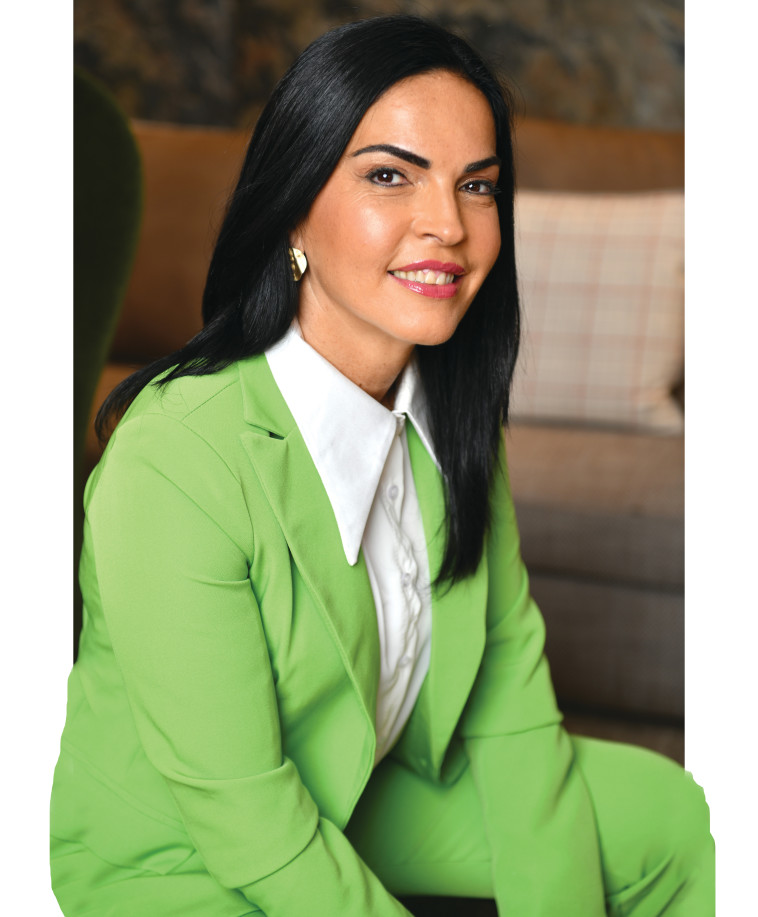 Doctor Galit Kaufman (Photo: Ofer Hajiov)
All paramedical professions have been in the same predicament for years.
"The situation is critical in professions such as clinicians, physical therapy, social workers, but much more so in geriatrics. In the end they want to make a living and they are right, but how can I produce good and advanced medicine with such a low budget. I don't know how to do it."
People don't really come to the profession either.
"The number of interns in geriatrics is very low. There's nothing to be done, it's not a sexy industry. No one stands in line, not doctors, not nurses, not cleaners. Even before the matter of the low budget, they don't stand in line. A nurse is finishing nursing school, and if you do a market survey Among nurses in the State of Israel, geriatrics will not come up as a place she dreams of going to."
A revolution in the budget
There are excellent specialist nurses in the geriatric field, but here, for example, we do not have specialist nurses because we cannot afford to pay them, everything is derived from the budget. And here Dr. Kaufman points an accusing finger at the Treasury. "We are not rewarded for equipment, complex dressing equipment for example, which is very expensive. We are not rewarded for many things because no one goes into the resolutions of who the patients are really in the geriatric branch and how complex they are. The reality has changed and is not similar to what was here ten years ago, therefore the entire financial aspect of the budget must undergo a revolution."
What does revolution mean?
"The rates of the Ministry of Health should increase significantly, I cannot point the finger of blame at the coffers because I was there. I do not want to blame, but I am calling out to the Ministry of Finance because even when I had representatives on visits and tours, I felt that there was a lack of basic understanding. The Ministry of Health understands, but the Ministry of Finance does not. We need to unite together, and see how we make the change and re-budget."
Let's talk about the regulation.
"A health care system should work to a standard, and regulation is an important thing, but I think that the regulation towards us is disproportionate and not adjusted to reality. In the end, you have to understand that if you want a Mercedes, pay and buy a Mercedes. But if you only have a hundred thousand shekels, you should probably drive a Hyundai. You have to make adjustments Between what exists, what reality looks like and how it is measured. I only strive for excellence and in this field one should strive for the highest. In order to implement the regulation and all the quality indicators, one ultimately needs a proper and reasonable budget to deal with it."
In the last decade, about 80 geriatric institutions in Israel were closed.
"If you ask me, and I hear from many colleagues in the field, they were closed due to an economic collapse. Sometimes the Ministry of Health also closed for one reason or another, but in the end everything revolves around money. When you don't meet the requirements, you close and return the keys, and in the end, this way it will be difficult to establish More and more institutions in the State of Israel. We will not build new rehabilitation beds, and the geriatric industry is likely not to build new rehabilitation departments. Stop the development you planned to do in the field of geriatrics, and those who build a complex nursing department know that they are embarking on a journey of financial suicide. And I say again, I am another strong and large network , think of institutions that only have a few departments or one center, and they are simply in a war of survival."
Isn't it far off today that health will only be for the rich?
"In the end, there can be a quality of life and basic things here only for the rich. I can say that in the end we must prepare for the future, and if the situation does not change dramatically, there will be fewer institutions, the hospitals will be overloaded, the old woman in the hallway, we will see these articles again every year and it becomes To be absurd. And if it doesn't happen, whoever can handle it will be able to cope and whoever won't be in trouble, and we don't want to live in such a country where we are worried about who will take care of our parents and even more worried about who will take care of us."