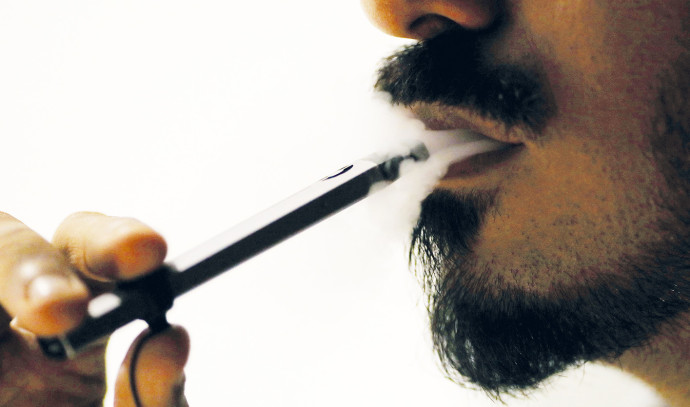

The Ministry of Health published this morning (Monday) for public comments, an action plan for all tobacco and smoking products. The conclusions are published about three months after the establishment of a national team with the aim of working to eradicate electronic cigarettes among children and teenagers. The background for establishing the team is two incidents that occurred in April and May of this year, in which the late Midan Keller boy died, and another boy was hospitalized due to smoking electronic cigarettes.
The doctors found out: children accidentally received a 10 times larger dose of a psychiatric drug at home
Do you smoke and want to undergo plastic surgery? You should reconsider
The team worked in four sub-teams – policy, enforcement, advocacy, training and influence, and included partners from many fields: government ministries, civil society, youth representation, parent representation, local government, various doctors including pediatricians and psychiatrists, academia and other professionals. The team's action was done at the same time as other actions that are done together with government ministries and social factors in order to raise awareness of the damages of these dangerous products.
The recommendations submitted by the team and approved by the Director General of the Ministry of Health Moshe Bar Siman Tov:
content:
Determining the prohibition of flavors
Giving the Ministry of Health the authority to enforce the current nicotine concentration limit in legislation (in relation to electronic cigarettes)
Limiting the volume of the filling fluid allowed for import, marketing and sale
Appearance:
Applying graphic warnings to all tobacco and smoking products
Applying visual uniformity to the smoking and vaping products (beyond the uniformity of the packs)
sale:
Ban on the sale of disposable electronic cigarettes
Selling tobacco and smoking products in designated stores only and reducing the number of points of sale
Raising the selling age to 21
Authorizing the Ministry of Health to enforce a ban on advertising on the Internet
taxation:
Comparison of taxation on electronic cigarettes and other tobacco products
Applying taxation to nicotine intended for non-medical use
Applying taxation to the device itself
Health Minister Moshe Arbel emphasized that "the phenomenon of smoking in the State of Israel has become a veritable epidemic. The proportion of smokers among the adult population currently stands at more than 20% and we are witnessing an increase in the exposure of young people to electronic cigarettes, all this, alongside the severe damage caused by passive smoking. This is a phenomenon It is very worrying and the Ministry of Health, under my leadership, is determined to promote measures to reduce it and increase awareness of the harm caused by it." He added: "We have a lot to do to reduce the number of smokers in the population on the one hand, and to prevent new ones from joining the circle of smokers on the other hand. The fight requires a complex and joint effort, and we are committed to implementing the policy in a variety of areas of prevention and encouraging smoking cessation, in order to promote public health – young and old Both – from smoking and its harm."
The Director General of the Ministry of Health explained: "The smoking epidemic is one of the most significant threats to public health, when according to the World Health Organization smoking tobacco and its products is the leading preventable cause of death. In recent years, the phenomenon of smoking has grown and expanded, and the serious damages of smoking claim the lives of approximately 8,000 women and men in Israel every year as a result of smoking, 800 of them as a result of forced (passive) smoking. Electronic cigarettes are a new and real threat to the health of children, teenagers and adults alike. A few months ago, within a few weeks, two boys were hospitalized following the use of electronic cigarettes. This is a wake-up call and the Ministry of Health is determined to act in order to reduce the use of all tobacco and smoking products, including cigarettes and electronic cigarettes. Given the extent of the spread of the phenomenon, the ministry examined all possible measures, acted and continues to act in many ways in order to raise awareness of the dangers of using these products."
"In the national action team there were many parties who had one goal in mind – to reduce the use of cigarettes and electronic cigarettes, and to protect public health in general and the health of our youth in particular. We recommend taking strict policies and dramatic measures that are required by the necessity of reality. When it is clear to all of us that the best way is to stop smoking She should not start smoking," noted Bar Siman Tov, "We also call on parents to recognize the threat and talk to their children about the issue. The Ministry of Health will continue extensive actions to raise awareness of the growing and widespread phenomenon of smoking and the harms of smoking products, in particular electronic cigarettes, which have become frequently used among my children youth and young people".
The Association of Public Health Physicians of the Medical Association said: "We welcome the publication of an action plan to deal with the harms of tobacco and smoking products.
The work of the action team is serious and important for public health. If the recommendations (such as graphic warnings) are implemented as soon as possible, many Israeli lives will be saved.
The blueprint lacks a decision on a budgeted and staffed multi-system national plan, in accordance with a government decision that has not been implemented since 2011."
Shira Kaslo, CEO of the project to eradicate smoking: "We welcome the document on the principles of action. This is a necessary action plan to fight the smoking epidemic and its very existence expresses the state's recognition of the need to fight the phenomenon. However, it is troubling that the document lacks any reference to enforcement mechanisms for smoking in Israel, with an emphasis on the prohibition of sales to minors and the prohibition of advertising and marketing of smoking products. Legislation alone, without defining supervisory and enforcement powers, will not be sufficient against the power of the tobacco and nicotine companies. Beyond that, as always, the test of the document will be in its implementation, with an emphasis on timetables, bills, regulations and orders, defining powers for the Ministry of Health and the various enforcement authorities, and a budget."