
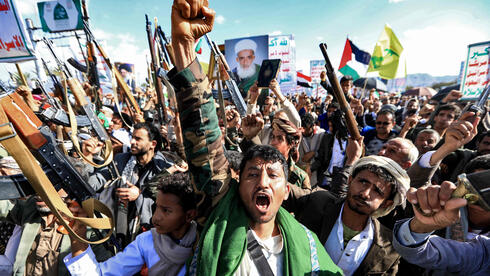

Iranian officials have outlined an escalation strategy designed to inflict economic damage on the United States without triggering direct military conflict, according to senior Iranian sources who spoke to the New York Times. The plan, developed by Iran’s Islamic Revolutionary Guard Corps (IRGC) during the recent ceasefire, involves coordinated pressure through proxy forces including Hezbollah and Houthi fighters, alongside military posturing in Iraq and a potential naval blockade targeting Saudi Arabia.
The strategy centres on three interconnected objectives: disrupting global shipping lanes to drive up crude oil prices, applying heavy economic pressure on Washington through increased regional instability, and leveraging Iran’s network of armed proxies to wage a sustained campaign without risking a direct confrontation with American or Israeli forces. By maintaining operational control through intermediary groups, Tehran aims to create sufficient economic strain to influence American policy whilst maintaining plausible deniability.
The plan reflects Iran’s sophisticated understanding of how to impose costs on the incoming Trump administration through economic rather than military means. With oil markets already sensitive to regional disruption, any sustained interference with shipping in the Persian Gulf or Red Sea could significantly raise energy prices globally, putting pressure on American consumers and potentially constraining Washington’s foreign policy options.
This calculated approach marks a shift from Iran’s previous strategies. Rather than seeking direct military victory, the Iranian calculations suggest a preference for grinding, asymmetrical pressure that exploits economic vulnerabilities whilst avoiding the kind of direct escalation that could provoke a devastating American or Israeli response. The strategy’s success depends largely on maintaining cohesion amongst its proxy network and avoiding triggering incidents that might force the United States into direct action.
Source: Ynet — Original article in Hebrew.


 © 2026 News In Israel - Israeli News In English. All Rights Reserved.