
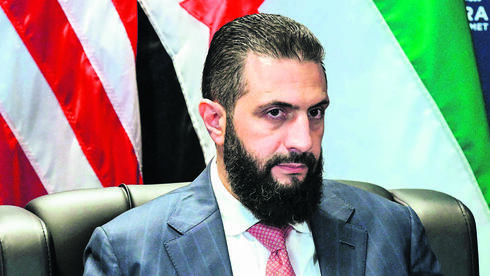

Syria’s president Bashar al-Assad has emerged as an unpredictable wild card at a moment when regional dynamics appeared to be shifting in Israel’s favour. This week alone has seen signals of pragmatism from Damascus, including a willingness to reduce Russian military presence on Syrian soil, agreement to hand over remnants of its nuclear programme to international inspectors, and renewed rhetoric about openness to peace negotiations with Israel. Yet Assad’s recent posturing has complicated this emerging picture, suggesting his government views itself as a critical regional player rather than a marginal actor.
Israel now faces a genuine strategic dilemma regarding Syria. Whilst Assad is hardly a new Anwar Sadat—the Egyptian leader who dramatically shifted allegiances during the Cold War—his unpredictability appears driven not by the caution one might expect from a weakened regime, but rather by political interests that remain opaque to outsiders. This ambiguity makes Syria a particular concern for Israeli strategic planners, who must account for multiple possible futures in their calculations.
The Syrian president’s recent moves suggest he is seeking to position himself as an indispensable player in any regional settlement, rather than accepting a passive role. His willingness to engage on nuclear matters and acknowledge Russian limitations indicates flexibility, yet his simultaneous assertive rhetoric signals he intends to negotiate from a position of strength. For Israel, this presents a challenge: how to engage with a regime that appears willing to talk whilst simultaneously pursuing strategies that could undermine Israeli security interests. The coming weeks will test whether Assad’s pragmatism extends to genuine negotiations, or whether Syria remains a ticking time bomb in an increasingly complex Middle Eastern landscape.
Source: Ynet — Original article in Hebrew.





 © 2026 News In Israel - Israeli News In English. All Rights Reserved.