The article was written in collaboration with Psagot College
Briefly about the capital market
The capital market is actually the arena or the platform where traders meet in various tradable products, including stocks and securities and other financial instruments. The capital market is actually an essential and inseparable part of a free and international economy and is to a large extent the economic backbone of many countries in the western world.
In the capital market, the sellers actually meet with the buyers – that is, those who want to raise money (public and government companies that develop various services and products) and those who want to invest money – that is, the buyers and investors in all those companies in the hope that their value will increase and thus actually generate a profit. Among the main players in the capital markets in Israel and in the world you will find the banks, of course, but also the venture capital funds and trust funds, provident funds, insurance companies and a host of other factors. The capital market actually provides sellers and buyers with a secure and supervised trading environment where the various activities can be performed safely.
In a rough division, the capital market can be divided into two:
- The primary market : the one that deals with the initial issuance of new securities, for example of one or another company that decides to go public and issue its shares on the stock exchange. At this point, the trade is between the company itself and the investor community, and when a buyer purchases a share, for example, from the primary market, then the money goes directly to the company.
- The secondary market: In the secondary market, the company that issued the shares is no longer involved in the interaction. That is, the buying and selling is done between the merchants themselves. At this stage the companies no longer receive the sales profits and they actually remain in the hands of the sellers. However, the secondary market is very important, since it is the one that makes securities liquid and tradable and actually indicates the demand for the shares and financial products of the various companies.
What is a stock market?
The stock exchange in its most simplistic sense is a market, when the goods traded in it are financial products, that is, securities, shares and the like. Some define the stock exchange as the mediator between buyers and sellers and between issuing companies and investors. Everyone who wants to trade in securities comes to the stock exchange, and therefore it is the main platform of the capital market investment world.
All players and entities operating in the stock exchange are obliged to follow the laws, guidelines and rules defined by the bodies supervising the stock exchange. The laws are flexible and relevant to all the various parties participating in the trade, including the members of the stock exchange (for example the banks and investment houses), the issuing companies and the private investing public. In Israel, there are bodies that supervise the stock market, such as the Insurance and Risk Capital Market Authority, the Securities Authority, the Authority for the Prohibition of Money Laundering and Terrorist Financing, and more.
And who are those bodies called stock exchange members? These are actually the banks and investment houses that have received permission to serve as members of the stock exchange (some rather strict requirements must be met) and are under its ongoing supervision. The meaning of this authorization is that anyone who wishes to trade on the stock exchange is obliged to do so through one of those members who offer to open a trading account with them. This means that in practice – all tradable securities and all trading operations go through those members. Among the members of the stock exchange in Israel you will find most of the local banks, three foreign banks from abroad and a number of investment houses Excellence, Meitav Dash and more.
As for the entities that raise funds through the stock exchange, these are quite diverse and include private companies on the one hand, those that wish to raise sums of money through the public and are obligated to meet stringent regulatory requirements for transparency, publication of financial data, and so on. On the other hand, the Israeli government is also allowed to operate on the stock exchange and issue four different types of government bonds. The stock exchange in Israel is the stock exchange in Tel Aviv, a business company that was incorporated in 1953 and became public in 2019 (today about eighty percent of it is in the hands of the public). This is the only stock exchange in Israel and it received a license to manage a regulated market for securities trading, thus constituting a reliable, safe and advanced trading arena.
What is an index and what types of indices exist?
When talking about trading in the capital market, one of the most basic and important concepts is the concept of index. There are many types of indices with the most common index being the stock index. The indices are often the best indicators of the state of a certain capital market and it tells us how the investing public feels about that market and the economic situation in it. The index can be used as a general indicator when you want to examine the direction of the wind in the capital markets, but you can also invest in the indices directly.
Each index includes within it a number of shares defined according to clear and strict guiding rules. It collects different data from each company that all together determine its value. Indices can reflect the state of the general capital market and include all the largest stocks, but there are indices that focus on specific areas of the market in terms of the value of the companies or industries in which they operate. It is also possible to see indices that center shares from one stock exchange alongside global ones that concentrate on certain industries and center companies from different countries and other capital markets. Here are some examples of the main indices in the stock market in Tel Aviv and in the world that will help to understand this concept a little better:
- General indices that reflect the market value of the stock exchange: TA 35 index, TA 25 index, TA growth index and so on.
- Indices of companies in the field of technology: Tel Aviv Global Index – Bluetech, Tel Aviv Technology, Tel Aviv Biomed.
- Bond indices: Tel Bond 20, Tel Bond 40 and Tel Bond 60 are the main and most prominent of all.
- Financial indicators: TA Bankim 5, TA Insurance Plus.
- Trade and industry indices: Tel Aviv Real Estate Index, Tel Aviv Oil and Gas Index, Tel Aviv Communications and Information Technology Index and more.
- Large indices in the world: S&P 500, the Dow Jones index, the Nasdaq index and so on.
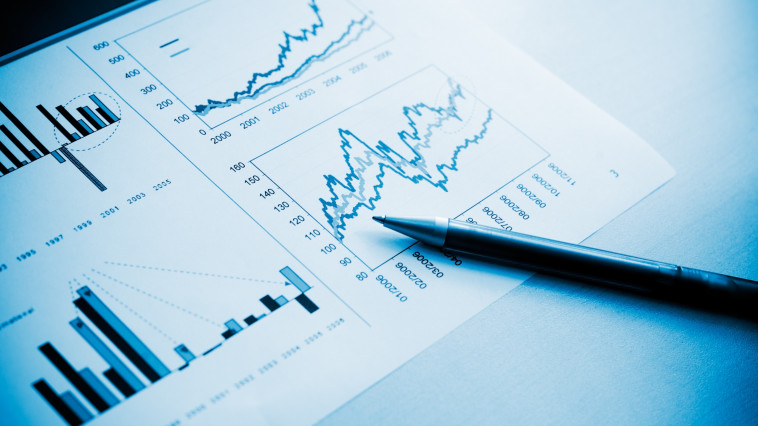 The capital market for beginners: the complete guide for the beginner investor (photo: Canva)
What are shares?
Shares are securities that give the investor who holds them some ownership in the company that issued them, for all the duties and rights involved. Whoever owns any share may vote in the general meeting of the company whose share he owns, receive a dividend and be entitled to receive capital from the company. The first stock in the world belonged to the Dutch Hod Mizrahi company and it was traded at the time on the Amsterdam Stock Exchange.
The distribution of shares among the shareholders basically represents their percentage of ownership in the company. From this it can be understood that the share is an asset that has a certain monetary value. For example, if a company has 1,000 shares and a certain person owns 10 of them, then he owns 1 percent of the company. Another person who owns 2,000 shares owns 20 percent of the company and so on. The person who owns the majority of the shares is the one who is called the controlling owner of the company. When the shares are divided between many parties, the controlling owner is the one who owns the largest share.
In general, there are two ways to profit from holding shares:
- Speculative profit: the most common use of stocks is to buy them at a certain price and sell them at a higher price, thus actually earning the difference. For this reason, many people hold stocks for a short period of time and not for a long period of time. This is where the need for important knowledge for beginners and an understanding of the capital market and its fluctuations in order to actually understand when it is right to sell a share that we own is reflected.
- Dividends : as mentioned, shareholders are also entitled to the rights and the proportional share in the dividends distributed by the companies, in fact the distribution of its capital gains. There are investors who go ahead with such a strategy and buy shares of companies that distribute dividends on a regular basis and thus actually enjoy a current cash flow at regular intervals. Of course, it is always possible to enjoy a speculative profit in the future, if the value of a share jumps up, which certainly happens from time to time.
Have you heard of the term bonds?
Bonds are another financial product that is important to know and are actually a type of loan that the issuer of the bond borrows from the investing public in the stock market. The issuing company receives a sum of money and undertakes to return it plus interest on the date specified in the bond itself. The payment of the debt will be made in accordance with the provisions of the bond and can be made in one payment or in several payments. There are various guarantees for the bonds that guarantee the return of the debt, such as liens, for example, but even though it is a solid and relatively safe investment, there is still risk in the bonds – for example, the erosion of their value or the inability of the issuing company to return the investment. It is important to talk specifically about three main types of bonds:
- Corporate bonds : A security that, unlike a stock, does not give its holders control over the company. A corporate bond is a kind of alternative to a loan from the bank, and the companies actually borrow money from those who bought the bonds they issued. The issuing company undertakes to return the specified amount plus interest and linkage. In order to issue bonds, companies must publish prospectuses in advance and commit to the maturity date. This is also the reason that, unlike a stock, the value of a bond is limited to a limited period of time in which it is worth money.
- Convertible bonds : A bond that allows its holders to convert it into another security, usually shares. In such cases, the companies must publish a prospectus that defines in advance the conversion ratio that the bond grants. At the end of the period you can receive the investment in money or convert the bond into shares as published in the prospectus. The incentive for companies to issue bonds of this type is a lower interest rate.
- Government bonds : The government raises money from the public through the issuance of bonds similar to the business companies.
Futures and options
Two more concepts that are important to talk about in detail are futures and options. A futures contract is another type of financial product that can be traded. It is essentially a contract between two parties – a seller who is obligated to deliver a certain amount of goods on a predetermined future product and the other party who buys and pays for the same goods.
These contracts actually go through the stock exchange's clearinghouse and can be traded just like shares are traded. One of the important features of a futures contract, which is also a distinct advantage, is the fact that the contract can talk about any type of commodity and is not limited to securities only. A futures contract for that matter can also talk about a certain amount of agricultural goods that the seller undertakes to deliver to the buyer. There are two main types of futures contracts.
Future contract – the standard contract that is traded in a similar way to trading in securities. Contracts of this type usually deal with physical goods or indices, bonds, foreign exchange and other assets. The second type is a forward contract – a custom made contract where the seller and buyer set their own terms. Most of the time these are contracts concluded between private investors and the banks and usually also deal with foreign currency.
Warrants are documents that allow those who hold them to buy shares of a certain company for one amount or another and for a limited period of time. Most options are valid for a period of one to four years. A company that issues options must attach a prospectus detailing how much it will cost to exercise them and turn them into company shares. When an option holder wants to exercise it, the company will issue new shares for him. When should you exercise an option? It depends on whether the quoted price is low or the current market value is high. The value of options of many early stage companies increases significantly over time.
What are the stages of trading in the capital market?
Trading on the stock exchange is divided into five parts – the pre-opening phase, the opening phase, the continuous trading phase, the pre-locking phase and the locking phase. We will explain each of the steps separately:
- Pre-opening : the first phase of trading on the stock exchange in which orders to buy and sell securities are sent to the stock exchange's computer, but no actual transactions are carried out. When an order arrives at the exchange's trading system, it will first check its correctness, and if it is indeed correct, the applicant receives a confirmation and it is recorded in the order book. Incorrect orders and those that are not suitable for the current trading phase are rejected and the applicant receives a notification about this. You can cancel or change orders as long as we haven't reached the next stage – the opening stage.
- The opening phase : in this phase the trade actually begins to take place and at the end a price is determined for each security. At this stage, the orders submitted in the pre-opening stage of trading are also fulfilled if no changes have been made to them. This is a short step that takes a few minutes at most.
- The continuous trading phase : This is the long and main phase in the process where trading takes place continuously, bilaterally and simultaneously. At this stage, each transaction will be carried out at the rate determined at the meeting between a buy order and a sell order. That is, the cost is determined according to the current price of the security.
- Pre-locking phase: In the pre-locking stage of trading, buy and sell orders are still sent to the stock exchange computer, but no actual transactions are carried out, similar to the pre-opening phase. These orders will join the orders that were submitted in previous trading stages but have not yet been executed. The stage usually lasts between ten minutes and fifteen minutes.
- Trading lock-up stage : In the fifth and final stage, multilateral trading is carried out for each security, where a price is determined for each paper, which is actually the lock-up trading rate. At this stage, the transactions carried out are in accordance with the orders recorded in the order book in the previous stage of pre-locking. At this point the daily closing rate is actually set.
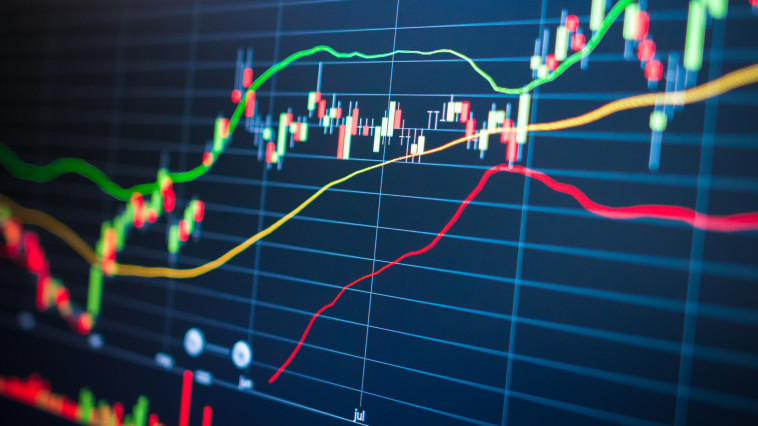 The capital market for beginners: the complete guide for the beginner investor (photo: Canva)
A bit about trading orders
The way in which buying and selling in the stock market is actually carried out is called "trading orders", that is, those instructions that we give as investors to act in one way or another, let's say to sell shares that we own. There are a variety of order types, subtypes and special orders, but in general we can talk about four main types of trading orders:
Market
A market order is a fairly basic buy order that does not place any limit on the buy. This order will actually result in the purchase of the stated number of shares at any price, so this is also an order to be careful with. The market orders can be divided into two – an LMO order which is a purchase of the stock at the opening of the given trading day on the stock exchange and an LMC order – a purchase at the close of the trading day. In automatic systems, the command is canceled if it fails to be executed for one reason or another.
limit
One of the most basic orders of brokers and trading systems, which says that when a security like this rises to a certain amount we will sell it, or alternatively if the value of any share falls to a certain amount we will buy it automatically.
Conditional orders
The conditional trading orders are the more advanced orders and here you can already find quite a few of them. Stop Loss – setting a certain automatic selling rate to minimize losses, Stop Limit – a slightly more complex command that has two different stages, trading stop and buying or selling operations. Other such orders that are important to talk about are the trailing stop order – a trading stop order with a variable trigger in which the trigger interval that will activate the order must be defined according to the amount of dollars or the percentage of the price of the paper. And an order called the OCO order – a special trading order that allows you to enjoy all the worlds in a certain way. It is possible to define that if the stock reaches a certain peak we will sell it to realize the profits or alternatively if it reaches a certain low. In such a situation when each of the conditions is met then the second command is canceled.
Unconditional commands
Next to the limit and market orders there are several other unconditional orders that are a little more complex. For example, an order for the immediate execution of a buy or sell operation and if it is impossible to complete the operation, the order is canceled, a certain order that defines the execution of several operations in a gradual manner, and more.
What should I do to start trading on the stock market?
There are all kinds of different ways to trade in the stock market and not just one way. Even people who open provident and training funds actually invest in the stock market through brokers of the insurance funds who do it for them with the money they deposit. I mean, you can start this way and you can trade indirectly and not directly, but if we want to try it ourselves and trade independently, it's a completely different story. To start trading in this way, we must open a trading account with one of the members of the exchange – some offer management of the trade for us by brokers and others offer platforms for independent trading. Sign up for the system and receive a username and password to connect. At this point you also need to enter a payment method and buy credit and basically you can start trading.
Anyone can do this operation, but it is strongly recommended to approach independent trading only after learning and accumulating knowledge and experience. You should always remember that these are not negligible amounts of money at all and irresponsible trading may bring heavy losses. The best option for those who invest for the first time is capital market studies where you study this whole world in depth, dwell on the important concepts and actually receive guidance and a demonstration of how active trading is carried out. To summarize this topic, trading in the capital market requires money to invest, an active trading account, in-depth knowledge and patience to learn and examine the field and to a certain extent also courage.
Can anyone?
Investing in the stock market was once considered a luxury reserved for the rich. Today, the landscape has changed and almost anyone can participate in active trading in the stock market in several different ways. First, you can invest in the stock market by opening a trading account. The various members of the exchange offer advanced online sales platforms that allow you to buy and sell stocks, bonds and other securities. You can invest in a one-time sum of money or set up regular deposits to the account, which will allow us to enjoy the profit on the interest.
Another option is investing in funds traded on the stock exchange. ETFs are a type of investment fund traded on the stock exchange, just like individual stocks. ETFs, for example, are essentially an investment in leading indices on the Tel Aviv Stock Exchange or global indices such as the Nasdaq and the Dow Jones. This is a relatively safe way of investing for beginners and allows exposure to leading types of shares at a relatively low cost. Beside all these, you can also invest in mutual funds. The funds basically pool money from a number of investors to purchase shares, bonds and other securities. The investment funds basically manage the investments for us through the company's investment experts and this is a safe and simple way for beginners who want to invest.
Bottom line, investing in the stock market is no longer the exclusive domain of the rich. Anyone can trade in the stock market by opening a trading account, investing in ETFs or mutual funds and in a variety of other ways. With the help of patience and proper guidance that can only be obtained in professional capital market courses, investing in the stock market can be a profitable way to increase our financial stability in the long term.
Study alone or take a course at a professional institution?
One of the common questions of anyone who intends to start trading in the capital market is whether to study independently through books and the Internet or through a serious course at a professional institution? The answer is complex, obviously, and what suits one person does not necessarily suit another, but here we can talk about the differences between the options and the advantages and disadvantages of each of them.
Independent learning will require us to acquire huge amounts of knowledge on our own, combine different sources and derive from them the practical knowledge that will allow us to trade safely. This is a good option for people who have the tools to do it, especially those who are essentially auto didactic and who have the leisure to delve deeper into the subject. It should be remembered that there is quite a bit of risk in this, because there is no sure way to know that the information we received is good and correct.
On the other hand, a course at a professional institution will allow us to get all the important and relevant knowledge in a concentrated and clear way. In a suitable study program you can go over all the basic concepts and trading laws and from there continue to active trading under the close supervision of teachers who are investment experts and professionals from the capital market. This option is suitable for those who want to get all the important knowledge that will allow them to start trading safely without touching marginal issues or wasting precious time. After a basic course, by the way, you can also continue to more advanced capital market courses and deepen your knowledge independently. Psagot College offers a wide variety of courses in the capital market for both beginners and advanced students, and for most people studying at a quality institution is the fastest and safest option to start active trading in the capital market.
Important tips
Right towards the end, here are some important tips that you should adopt when starting to trade in the capital market:
- Don't invest all your money : You know the saying that you don't put all your eggs in one basket? So there is no more accurate than it when it comes to investments in the capital market. If we choose to invest all the free liquid money we have, we are simply taking too great a risk and putting our personal capital at risk. Smart trading is one that spreads the risks and it is recommended to diversify our investment portfolio as much as possible, when it is certainly possible to invest in other ways and not through the stock market, for example real estate investments.
- Patience is the key to success: advanced and experienced investors know how to identify transactions with a quick and sharp return, which are also those that are usually higher risk, but the correct and smartest way to invest, certainly for beginners, is patience and long-term investments. If you start selling and buying shares constantly, in the best case you will not be able to generate a large income and in worse cases you may also lose quite a bit of money. Patience is the key word when it comes to the capital market and it is important to be calm all the time and not to take hasty and unreasoned steps.
- Don't always think you know everything : the biggest and most successful brokers and investment experts in the world will be the first to admit that we don't really know everything either, even if we have invested and studied the field and gained years of trading experience. Humility is another important quality for successful investors and arrogance in relation to a certain product ("This stock will never go down in life", "There is no way anyone will ever invest in this company") is always a potential for mistakes that may be worth quite a bit of money.
- At least in the beginning – it's important to focus on learning and not necessarily on earning money : it's very natural to be "very hungry" at the beginning and try to earn as much money as possible, but at these stages it's really not what you should focus on. In the first months what is needed is mainly to study, experiment with different orders, feel the market and get an idea of its fluctuations, read about leading companies and keep up to date with the financial news in Israel and the world and simply gain as much knowledge as possible. With knowledge comes confidence and with years comes experience.
- Find the best trading system : Don't choose the first trading system you come across like many others. Conduct a small market survey, get recommendations from people you trust, read articles about the various trading systems and above all try to understand which trading system best meets your needs and the way in which you will be interested in trading. It may be a technical matter in the end, but a good and advanced trading system can be the difference between successful trading and failed trading.
Summary
It was the comprehensive and complete guide for the beginning investor in the capital market. With this knowledge you can definitely get started, and as you can see the safest way to do it is after you acquire the appropriate knowledge in a professional course. It's time to get to know the courses of Psagot College that will give you all the tools for safe and profitable trading in the capital market.
The article was written in collaboration with Psagot College