

One of the most Israeli questions is "Do you have a club card?" But what has become the "roof" in the Studio of Great Land represents an entire industry, which sometimes seems unnecessary, but sometimes seems like a good way to survive the cost of living. Club cards, or in a nicer language loyalty programs, have been a mainstay for many retailers for decades. Almost every Israeli has at least one club card in his wallet, if not two, and if you insist on an average – then the average Israeli has 4.3 club cards in his pocket, whether they are private label memberships or large club cards such as "Member", "Ashmoret", " Play Card", "Lifestyle" etc. We will get to them as well.
We see the influence of the customer clubs in our shopping basket, when we come to book vacations, attractions for children, especially now at the end of the long holiday, and even when buying tickets for concerts in Israel. If you check, you will find that few people buy tickets to the theater, for example, or to music concerts at full price.
no longer a baby
"Today we are seeing a sharp drop in profitability around the world when it comes to online shopping," says Mittal Tiberia-Agmon, VP of Regional Sales for Salesforce Israel. "One of the things we realized following the research we did is that what interests quite a few customers is the personal connection to the brand and how the brand appeals to them. Today, perhaps in contrast to the past, each brand understands better how to create a personal platform for the consumers it works with."
 Mittal Tiberia-Agmon (photo: courtesy of Salesforce)
According to the data of Salesforce Israel, 56% of consumers claimed that they are more likely to buy from brands with loyalty programs. So, as direct-to-consumer sales become more and more real for consumer goods companies, so too do industry loyalty programs that help build deeper, more direct customer relationships. And in fact, according to the Salesforce Retail and Consumer Products Report, 70% of retail decision makers say their companies currently have loyalty programs.
We are Israelis, and I have to ask, so what's the catch?
"Not all organizations always knew how to make the transition and give me the exact personal discounts. I am a mother of two children and it is very possible that a customer club of which I am a member will continue to offer me baby clothes even though my children are already ten years old. Here is the challenge and we work on this with our customers, Understanding how through this we will get to know the customer better, understand his profile and what interests him, I will know how to offer him the most suitable discount for him. There is still a leap here that some customer clubs need to make for the end consumers."
How do you help companies target the customer club in a personal way?
"We first of all want to get to know the end customers, understand what their journey is and of course make a connection between the physical and the digital. Because today, I go shopping and buy in a store and tomorrow I will sit in my pajamas at 12 at night and make the purchase from the phone. I still want to make the connection This. After we have enough data, I understand the customer's status, his profile, and thus I will know better how to contact him. Those who purchase because of a customer club, will buy much more the more accurate the discounts offered to them are."
And the development of artificial intelligence also has a part in the change that is happening to customer clubs. In the consumer goods industry there have been many changes in recent years, the main one being the use of data. The growing volume of data, along with the ability to use AI to take intelligent, real-time action, provides a tremendous opportunity to increase efficiency, deepen customer relationships, and pursue new business opportunities and revenue streams.
According to the same report above, consumer goods companies have taken note of the growing reliance on data, and the need to get the most out of it. Almost all respondents (93%) agree that they can use data effectively to refine prices and promotions, for example, and 92% say the same about their ability to use data to improve overall profitability.
Israel has the leading clubs (for example "Chevre" of the security forces, "Ashmoret" of the Histadrut of Teachers and other bodies with hundreds of thousands of member-customers) and then the rules of the game change: it is no longer brands that lead the loyalty program, but the consumer club that the brands are fighting to be included in Among the suggestions he makes to his friends.
"The big clubs have a very large purchasing power, but the story is similar and different. If I am a member of one or another club, I do have big discounts there, but I will have to look for them. I say to myself, okay if I want to take the children to a certain place, I will start looking for where the discounts are bigger. As soon as I look at a loyalty club of a certain brand, or a certain chain, they already contact me personally and the more they know me as Mittel and my father's house and what I buy, they will know how to proactively come to me and offer what suits me, Whereas in other clubs they will usually say 'there's a discount here and there' and I'll go in and go in – if it doesn't suit my taste I'll stop going in, and I'll only come there when I need to make a certain purchase."
Trust is part of the strategy
"As soon as I come up with a customer club, I want to create loyalty to my brand, and as soon as they send me something, I want to know that it's not fishy, that it's not something that doesn't match my set of values. And it's something that we're working on. We're trying to see how as a result of that we Addressing the customer, we do not spam (from the word "spam" – TL) him. You produce something that links you to the brand, they understand that your lifestyle is like this, so they give you something similar, recycled clothes for example."
Do you foresee an increase in loyalty programs and a war on the customer because of the cost of living?
"The way we see it and from the conversations we have had with organizations, there is an expectation. Most organizations have different types of customer clubs, which are not always optimally managed. The cost of living has changed the phase because people are becoming more hesitant, at the same time, we see that as soon as we give them A reason to come to us and buy – they buy and increase the shopping basket. The club produces an increase in your shopping basket. In the US, for example, it is an increase of about 10%. I generate more engagement, I know more about what you want – and I know how to offer more."
 Shopping bags (Photo: Eng Image)
The savings game
The loyalty programs, or if you want the customer clubs, also enter into less conventional areas, but ones that are gaining momentum all over the world, gaming for example. "Your parents used to yell at you when you watched TV all the time, while when they were children they read books, so today everyone plays computer games, this is the world we live in," says Eili de Bar, CEO of Bap Technologies, which established an international customer club Designed for addicted gamers.
I understand it's not just for kids?
"You'll be surprised, but the average age of gamers in Western countries is 33. And it's not just men, we have an interesting segmentation of 55% men and 45% women."
"The general trend in the world of customer clubs is changing," says de Bar, "it is more focused on the customer and less on the brand and on following the customer's consumption habits because it gives added value. The psychology behind it is that we all want to save money, and be a part of something, gaming for example is something very communal".
Bap Technologies is a company founded by gamers for gamers. "We are connected to the community first of all and understand the needs of this thing. We are a kind of layer that sits above all the games and it doesn't matter which one. In fact, we know how to analyze the actions that the player does in the game itself, we really focus on the customer's action. He knows how to appreciate it, and I make him by incentives to constantly be a little better."
What incentives?
"You accumulate points and can use them, whether to buy a function within the game, whether for gaming equipment or whether to order Domino's pizza to your home, as happens in the US. The benefits for our customers are different in the US, Canada, England and Israel. We believe in connecting to the community and its specific needs. The average user plays 2-3 hours a day, that's a lot. And the idea is to connect to the real world as well and not just the virtual world, which is why we recently launched a collaboration with Isracard , a Bap credit card, gamers, and just as you shop at Shufersal and have a Shufersal card, here the card is aimed at that as well."
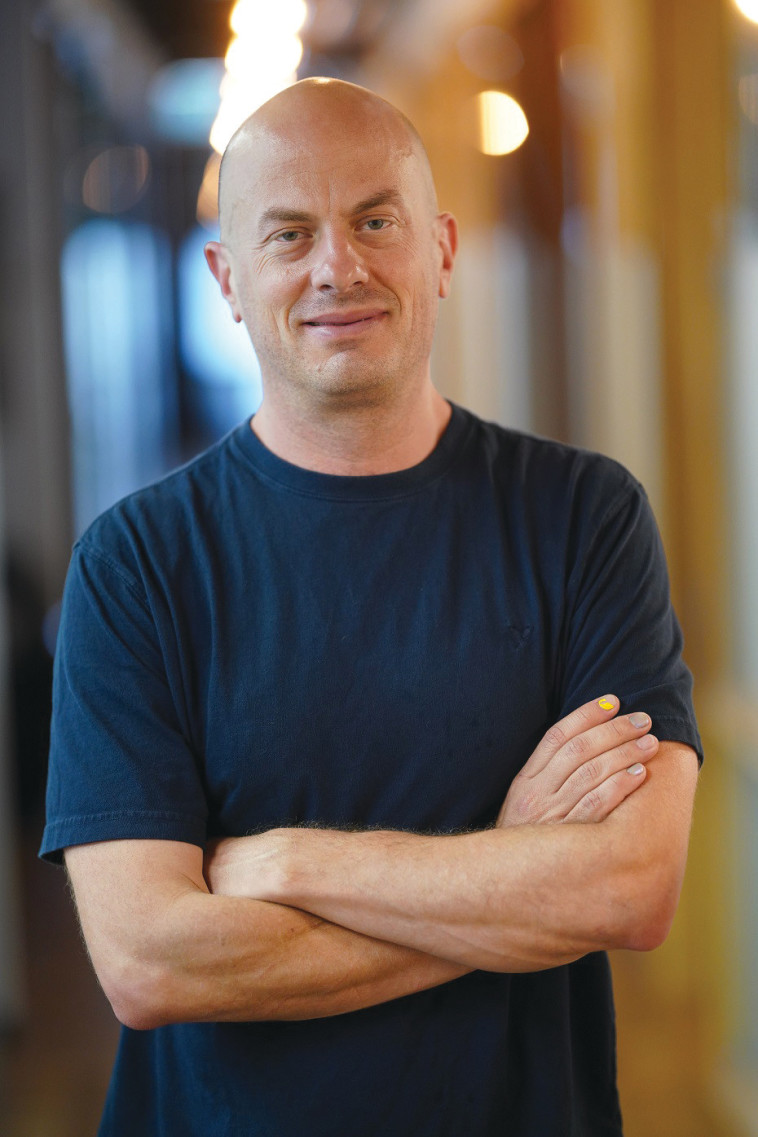 Ili de Bar, CEO of Bap Technologies (Photo: Ilan Spira)
Gamers are people who spend a lot of money. How many customers do you have in the world?
"It can reach very large amounts every year. We currently have over 13 million registered customers around the world from Greenland to Kazakhstan. Their use is increasing all the time. In Israel there are over 100 thousand registered."
Where is the market stronger?
"In the end, our income is in a model like Spotify, advertisements or monthly subscriptions, most of the customers are in the US and Canada, but as mentioned we are open to anywhere in the world. The credit card was launched in Israel and also exists in a different format in the US, and the goal is to expand to other countries."
How does this affect shopping?
"Because it is aimed at a target audience, we give discounts on purchases on the Internet, gamers mainly buy online. The goal is for them to use a credit card as their main card. By the way, 80% of customers in Israel only shop at customer clubs, the customers don't want to be suckers, they say, we spend a lot A lot of money and want something in return, and our goal is to give our audience the value. We target the card to a young audience 18-34, who are 60% of the purchasing power, the goal is to be the first card for young people, who will run with it for years."