
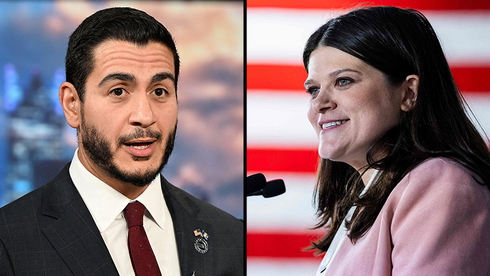

The battle for the soul of America’s Democratic Party is reaching a crescendo as primary elections heat up across key swing states. Progressive candidates backed by the party’s left wing have ousted a series of moderate nominees in recent weeks, particularly in traditionally safe ‘blue’ districts. However, tonight’s vote in Michigan—a crucial battleground that Donald Trump won in 2024—will prove decisive in determining the party’s direction, with a hotly contested Senate race at stake.
At the centre of the clash is Dr Abdel El-Sayed, the son of Egyptian immigrants, who has become the progressive left’s standard-bearer in Michigan. Polls suggest he is on course for victory, having built a coalition around anti-corporate messaging and vocal criticism of Israel’s policies. His campaign rhetoric, punctuated by declarations that he is “dangerous to corporations”, has resonated with younger and Arab-American voters frustrated with traditional Democratic establishment politics.
El-Sayed’s main opponent is US Representative Haley Stevens, who has positioned herself as a pragmatist committed to protecting American manufacturing and maintaining strong US-Israel relations. Pro-Israel advocacy groups, coordinated through AIPAC (the American Israel Public Affairs Committee), have pumped approximately $32 million into advertising and campaign support backing Stevens. Some observers worry the race signals a broader generational divide within the Democratic Party over Middle East policy.
Stevens’ campaign team has sounded alarm bells about El-Sayed’s political ambitions, warning that his Senate race represents merely a stepping stone to a future presidential bid. The contest underscores how domestic American politics has become increasingly polarised around questions of US support for Israel—an issue that once commanded broad bipartisan backing but now divides Democrats along ideological lines. The Michigan primary result will offer crucial insight into whether the party’s grassroots activists are drifting leftward on foreign policy.
Source: Ynet — Original article in Hebrew.



 © 2026 News In Israel - Israeli News In English. All Rights Reserved.