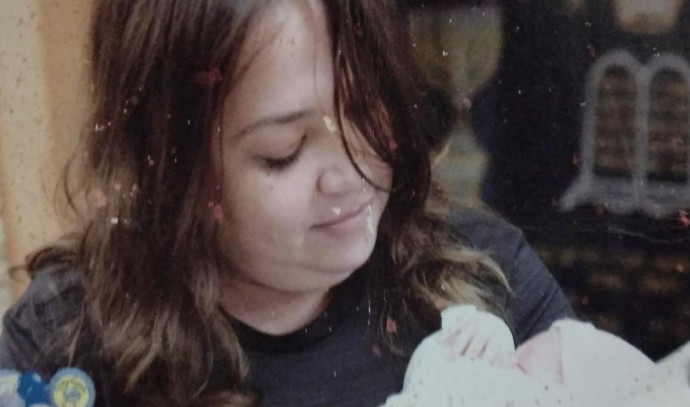

In 1988, the case of gang rape in Kibbutz Sharam rocked the country. Yael Grimberg , who was only 14 years old at the time, was brutally raped by a group of boys, abusing her physically and mentally for many days. Since then, she has struggled to maintain a normal life routine, but without success. Today (Sunday) it was learned that Grimberg passed away at the age of 49. As a result, we returned to the interview she conducted on January 3, 2022 with Golan Yokhpaz and Anat Davidov on the program 'Seven Tshea' on 103FM .
Yael Grimberg, a rape victim in 1988, passed away
At the time, Grimberg spoke candidly about the difficulties she had experienced since those difficult events, and admitted: "There is not a day that I go to sleep and I am not at the kibbutz in one way or another. I always get there and usually I am still the same 14-year-old girl. It's like I froze. I don't work For years now. I get up in the morning, make Ness coffee, smoke a cigarette and watch TV. As the morning comes, I wait for the evening to come, so that another day will pass. I don't call it life, I'm just here."
Grimberg left behind three daughters. In the same interview, she said that "they support me a lot, but I don't want to throw myself on them. They are at the beginning of their lives. I see the grandchildren and it gives me another 'push'. These are the bright spots I have."
Over the years, she stayed several times in psychiatric hospitals and even threatened to commit suicide: "My daughters saw me in very extreme situations, when I just didn't want to continue living. I didn't get out of bed, I was a lump of meat lying down and doing nothing. I was strong but not really, I call it – auto pilot".
"It's the same disconnection I had then, when my case happened," she added, "this disconnection exists and it doesn't go away over the years. I don't want to confuse the brain and say it goes away, because it doesn't."
Grimberg also dealt throughout her life with feelings of guilt and depression about those days, "Why did I actually get in the car? I have no idea how many times I prayed to God that I wouldn't get up in the morning. I have to take pills just to get out the door. I haven't left the house for almost three years, I don't feel safe".
In addition, she remembered those days in the kibbutz, and the tedious process she had to go through in filing the complaint. "I told the nurse of the kibbutz what happened and after a few days the police came. They asked me many times, if they write me a letter of apology, will I forgive them? I said no – you can't forgive. I just couldn't believe it was happening to me, these are people I grew up with since the age of 5." , she said.
In fact, it all started a year before. "The leader, as I call him, probably loved me or something, but he always bullied me," she said. Grimberg repeated that one evening they offered her to meet a boy, and she answered in the affirmative. "We talked for maybe 2 minutes and then they all just got into the car. That's where my life basically ended. For me it happened yesterday," she explained, "If I really concentrate, I can even tell what they were wearing."
When her daughter shared that she had been sexually harassed, Yael advised her not to file a complaint. "I told her what would happen. 'You filed a complaint, you'll have to identify him, they'll have a conversation between you and in the end he'll get four months in prison. Do you want to go through that? You're my daughter, they'll take pictures of you,' and then she got over it."
Yael Grimberg was defined as post-traumatic and received an allowance from National Insurance. Despite this, she found it difficult to maintain a stable lifestyle and was subject to enormous financial difficulties.
Assisted in the preparation of the article: Shani Romano and Oferi Glichman 103FM