"For 36 years, since Argentina's previous World Cup win, I have been waiting for this moment," says Marcelo Blidstein, who immigrated to Israel from Argentina at the age of 12, in light of the dramatic victory of the Argentine team over the French team yesterday in the World Cup final. "I saw the game with my family, with my brother, sister, parents. The joy was very great, I almost had a heart attack. Even if the Argentine team plays in the middle of the night, I wake up to see it."
What does this win mean to you?
"I like to quote the Uruguayan writer Eduardo Galano, who was also a football fanatic. He said that in life you can replace everything, except for a football team. For us, football is something in the blood, something built in. It is the soul, especially of those born in Argentina. For me, Argentina's victory comes first A lot of joy after many years of frustration that the national team was not able to reach where it was supposed to be. This national team is a part of me, like a family."
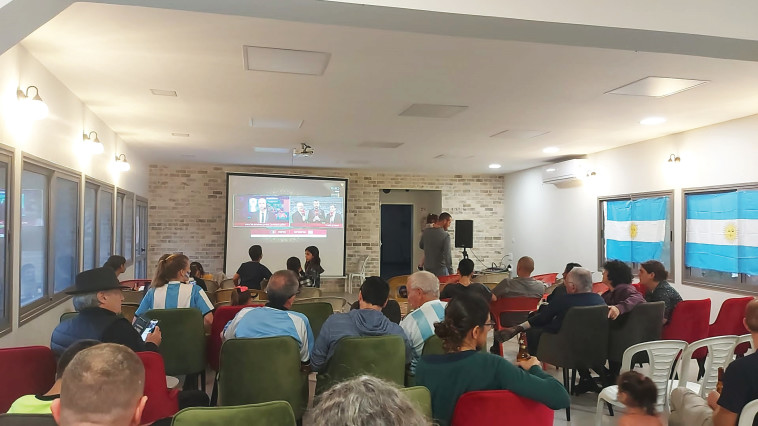 Kibbutz Or Hanar (photo: Private)
Blidstein, 58, doctor of history and a resident of Kfar Saba, immigrated to Israel in 1976 for Zionist reasons. Yesterday he saw in the media how the streets of Argentina were filled with hundreds of thousands of residents celebrating the World Cup. "This victory puts the Argentine people where they would like to be: In the first world, like Europe, it doesn't matter if their reality today is different," he says.
"Argentinians live in a very difficult economic reality. A victory like this gives them hope that Argentina can be a developed country like other countries despite all its problems. This victory gives pride, cohesion and hope to the Argentine people. There were even Argentineans who sold their cars to be able to get to Qatar and see the team's games. It is clear that in a few days the people of Argentina will have to return to their reality. The actual situation is difficult, but football brings emotional comfort. At least during the last month, and now especially in light of the victory, there was a time of joy for the Argentinians, a time of happiness when they accompanied their team . In Argentina, they didn't write about anything other than the national team this month. You had to scroll right down to the local websites to see other current affairs news."
Ariel Shagerman, 57, from Kibbutz Or Hanar in the western northern Negev, many of whose founders in 1957 were immigrants from Argentina, immigrated to Israel from Argentina 20 years ago. "Since I was born I have been an ardent fan of the Argentina national team," he says.
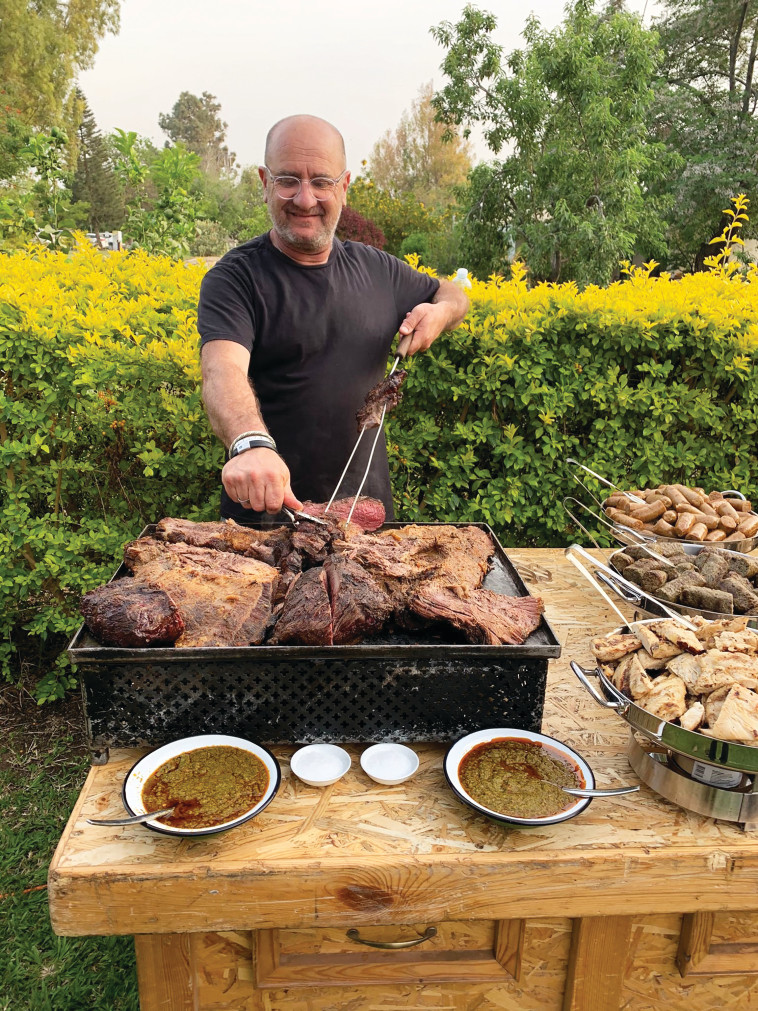 Ariel Shagerman (Photo: Private)
"Football for Argentines is like water, we live on football. I saw the game at home with my son Jordan, 24 years old, just me and him. We didn't let my wife watch with us because in the first game in which Argentina won my wife was in another room, and since then it has remained like a lucky charm In addition, my son watched all of Argentina's games in the World Cup standing for the same reason – that in the team's first winning game, he stood. After the victory, we went to celebrate at the kibbutz's cultural center with over 300 people, and the joy was great."
Shagerman visited Argentina about a month ago. "The situation in Argentina is difficult," he says. "Usually in Argentina, the problems are very noticeable at the end of the year, when there are Christmases and New Year's Eve, and people want money to get through these holidays. In the middle of the World Cup, especially outside of Buenos Aires, people came to supermarkets and asked to be given free food. As soon as there is a celebration, then people forget."
What does this win mean to you?
"A lot of people in Israel, who have nothing to do with Argentina, sympathized with the national team because they really wanted Messi to take the trophy, while for me it was far beyond Messi. For us, the Argentines, soccer is part of life, of everyday life, of Argentina's carnival. For us, to be the world champion in soccer It's not like being the world champion in judo, for example. For us, soccer is life, soccer is joy. Although I no longer live in Argentina, this tradition remains, and we pass this love for soccer to future generations. You should have seen in our kibbutz children who were not born in Argentina, But yesterday they looked as if they were born in Argentina. Soccer is part of Argentina's folklore. Everyone born in Argentina has a team that their parents tell them: 'This is the team you will like.'"
"Since I was born, I have been a fan of the national team," says Avraham (Cacho) Schwartzberg, 72, from Kibbutz Maflisim in the northwestern Negev, which was founded in 1949 by pioneers who came from South American countries. "I watched the game with friends and family members at my house. After the victory we went out to celebrate at the kibbutz."
Schwarzberg immigrated to Israel from Buenos Aires at the age of 35. "For us, Argentina's victory was a great joy. We suffered a lot until this moment, and then all the joy burst out," he says.
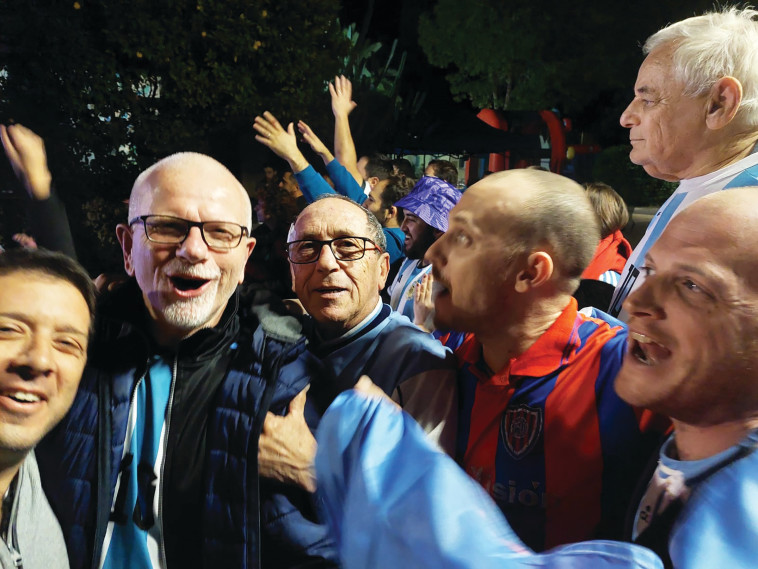 Avraham Schwartzberg (third from the left) (Photo: Private)
 What does this victory mean for the people of Argentina?
"They have almost nothing left. They looked forward to this World Cup like air to breathe. This is what they have left. The situation there is not easy, and after the victory they forgot everything. There was a reason to party. At least for a few days they can think about something other than economics and politics. When the players arrive with the cup in Argentina, there will be more celebrations, but then everyone will be left with their own problems, with the existing economic and political situation."
I turned around and came back
"In Argentina, the economic situation is quite severe," says Pocho (Hanan) Brauda, 82, from Kibbutz Maflisim, who immigrated to Israel at the age of 21. "But since I can remember, the situation there is not good. Winning the cup gives people some moments of satisfaction. I am an ardent fan of Argentina from a young age. Where will you find an Argentine who is not a fan of the national team? We saw the final match at my house together with about 50 people, family members and friends. There was a big projector on which the game was shown, and at the end we went to the club, and there was a big celebration. My relatives in Argentina also went out to the squares And they celebrated. We had great joy, and what is more surprising is how our sons, our grandsons, are infected with this joy. Sometimes I feel that they are more Argentine than me."
"I watched all the World Cup games at home, but yesterday I decided to break the tradition and go to Ramat Hasharon to watch the final with the grandchildren and light the first candle of Hanukkah," says Eddie Polonsky, 62, from Kibbutz Or Hanar, born in Buenos Aires, who immigrated to Israel at the age of 19. "I started driving, they said the roads would be free, but in reality I realized it would take me about two hours to get there, that I would be late for the start of the game. So I turned around and returned to the kibbutz. I saw the game with my soldier son and my wife."
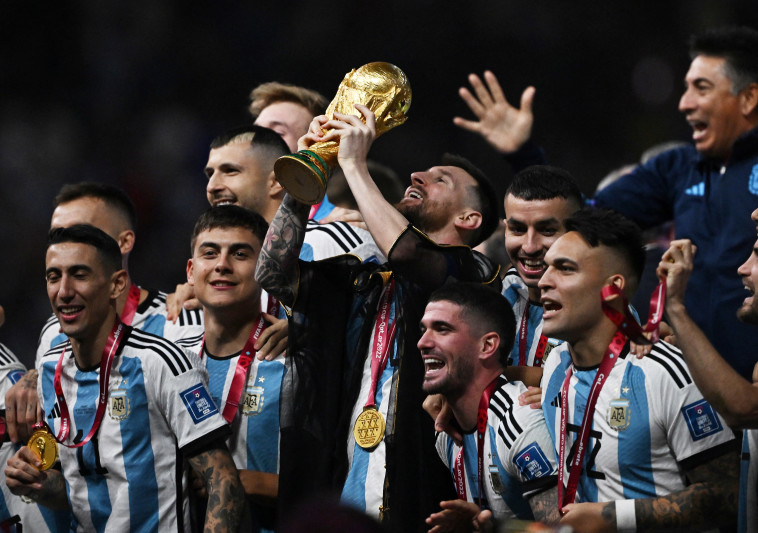 Argentina lifts the World Cup (Photo: Reuters)
"At the end, I celebrated in the dining room square. There was a big celebration, and then we went to the Ashkelon marina to continue celebrating. During the game, my smart watch suddenly informed me: 'Pay attention, your heart rate is over 100 beats per minute.' Two citizens died while watching the game. After that, one of the things the Argentine media dealt with was teaching people how to breathe during a game. They advised people at risk, those with heart attacks, not to be alone and not to watch penalties."
What did the win mean to you?
"The win was a dream come true. I had already seen Argentina win the World Cup held in Argentina in 1978 when I was still living there. But then the win was under military rule, and the joy was very mixed. I immigrated to Israel to escape the persecution of the military government. In 1986, when Argentina again won the World Cup, I was already living in Israel. I wanted to identify more with the State of Israel and we almost forgot our Argentine citizenship. After a few years there was no longer any confusion between Argentine and Israeli identity."
"I am Israeli, very Zionist, I am a farmer, and I have no confusion and no internal debate between my Israeli identity and my sympathy for the Argentine team. I greatly admire the national team and do not forget that a team is a team, a country is a country. There is a team that is the Argentine national team and there is a country that is The State of Israel. It was a tremendous emotion to experience the victory together with the children and grandchildren. It is very exciting, and somewhere they also feel a kind of pride to say that they are the children and grandchildren of Argentines. The victory of Argentina gave some kind of relief to the Argentine people, where the economic situation is terrible, and to us as well , here in Israel, it gave a bit of an emotional escape from all matters of politics and security."