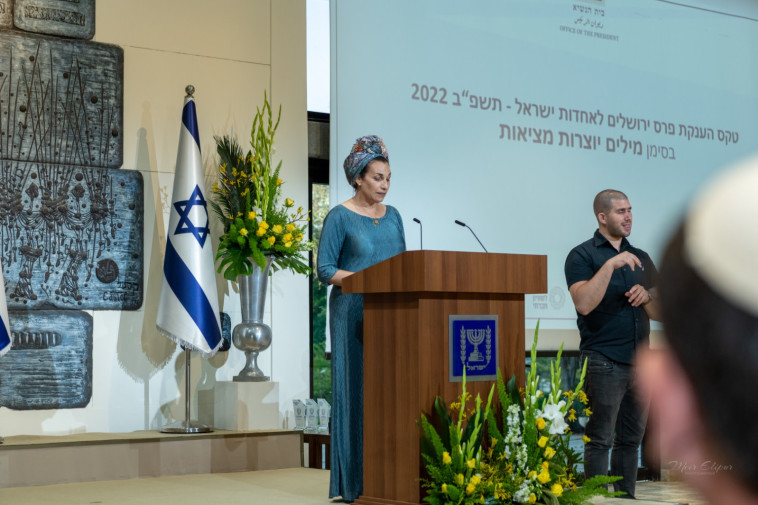

In the days of unprecedented pain and division that Israeli society is going through and following the ever deepening rift, Bat Galim and Ofir Shaar were sitting in their home in the Talmon settlement and felt a strong need to intensify the work of the "Unity Day" project. "The people of Israel demonstrate their strength in times of crisis and external threats from our enemy, but now is the time and the real challenge, to remain united even in times of crisis at home," say the Shaar couple in a joint conversation, who head the Sunshine Association, which they founded in memory of their son Gil-Ad Hiid with the aim of promoting Connections in Israeli society and between Israel and the Diaspora.
"Unity Day" is an initiative of the families of the three boys – Gil-ed Shaar, Eyal Yafarah and Naftali Frankel who were murdered in the attack during the summer of 2014, which began with the desire to bring to expression the feeling of mutual guarantee and unity that prevailed in Israeli society following the kidnapping incident, and is noted throughout the country and in Jewish communities around the world too year, starting in 2015. What began as a project to commemorate the memory of the boys and to remind the general public of the importance of unity in the nation grew stronger, and dozens of projects were added to the ceremonies and the awarding of tokens of appreciation, in an effort to preserve unity in the hope that "Unity Day" will lead to unity throughout the rest of the year.
"Most of us get to know other sectors of Israeli society through the mediation of the news broadcasts in the media that choose to focus separately and differently," Bat Galim explains. "As families who experienced the beautiful moments of the media, which knew how to convey the great embrace we received from the people of Israel, it is painful to see how the media misses its great hour in the ability and importance to convey messages of unity and reconciliation."
Unity Day will be celebrated this year on May 23, this is the ninth time, and over a million Israelis are expected to take part in over 400 government, school and community events throughout Israel and the world. On June 6, a festive recognition ceremony will be held at the President's residence which will in fact mark the "Day of Unity" events, during which prizes will be awarded in four categories – local, national, international and educational, to people and organizations that work to bring together different parts of Israeli society and the Jewish people in the Diaspora.
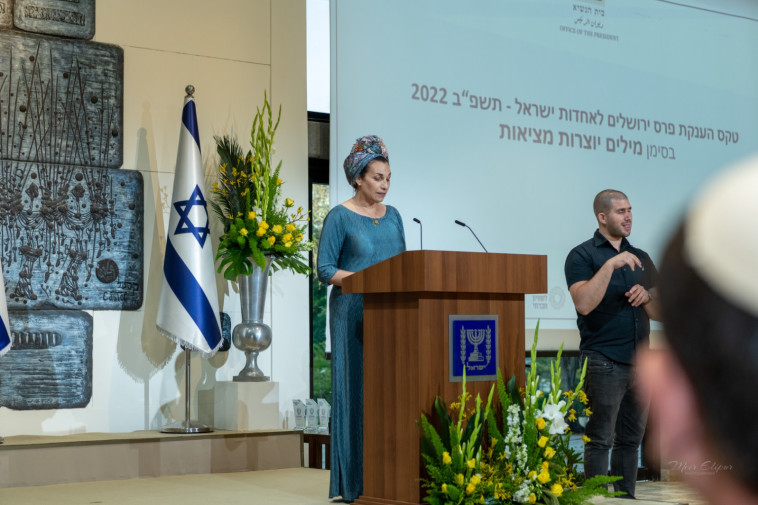 "Unity Day" (Photo: Sunshine Association)
The controversies and divisions that have led to a boiling point in recent months, even in terms we are used to in Israeli society, have increased the motivation among the Shaar couple to channel the events of Unity Day this year for reconciliation processes between the various groups in Israeli society. For this purpose, the Shaar couple harnessed dozens of bodies from all ends of the political and social spectrum in Israel who wish to join the important mission of bringing together the rifts and lead to a record number of events marking the day. The "Unity Day" bill passed by a preliminary vote in the Knesset a few days before the Seder night strengthened the Shaar couple's feeling that the ninth Unity Day is expected to be quite different from its predecessors. According to the bill that the couple has been promoting for seven years, Unity Day will become another state day in the Hebrew calendar, which will be noted in the Israeli Knesset and government ministries, the Israeli education system, academia and culture, youth movements, and more.
The murky public atmosphere that accompanied the weeks leading up to Memorial Day and Independence Day caused the Shaar couple to have difficult feelings. "In previous years, we experienced quite a few protests and tensions that accompanied these days, but when the disputes threatened to harm the sanctity of these days as well, we realized that something had to be done."
And so, after consulting with the other Unity Day partners, only about a week and a half before the eve of Holocaust Day, Bat Galim and Ofir made a decision to advance the commemoration of the Unity Day events to the "Ten Days of Salvation" that are noted between Holocaust Day, Memorial Day for the IDF martyrs and victims of hostilities, until the day Independence, in the 'Israeli Living Room' project. As part of this project, Israeli families across the country opened their homes to shared circles of conversation with citizens and neighbors of a style never before seen in their living room. – 200 families across the country who wanted to open their homes and especially their hearts, and host discussion groups."
Another example of a unique initiative taking place this year, for the first time as part of the 'Unity Day' events, is the "Encounters on the Road" initiative, which seeks to create interaction and a common dialogue with passengers on the Israel Railways with the aim of removing barriers, creating connections and getting to know the difference.
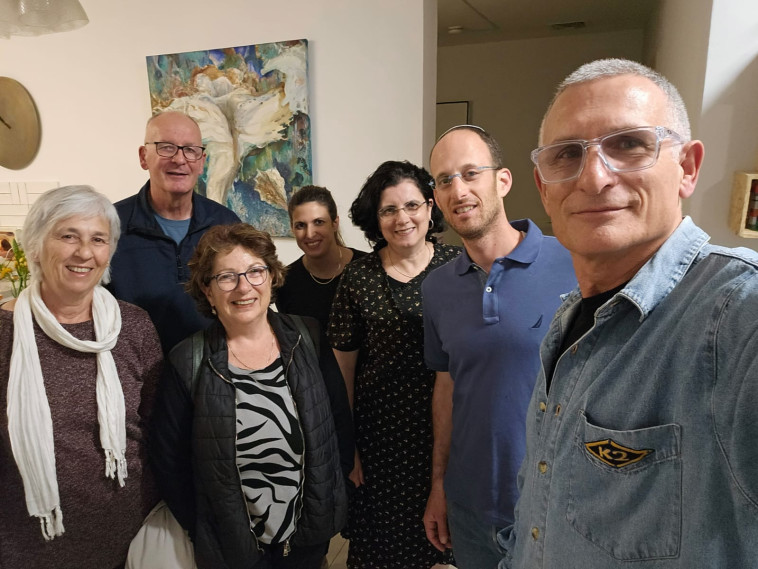 "Unity Day" (Photo: Sunshine Association)
"We are taught 364 days a year that it is forbidden to talk to anyone other than me, and the conversation through the media and social networks only furthers the chances of speaking authentically and without barriers," says the initiator of the project Gefen Meir. "Precisely now, when the rift in Israeli society is deepening every day, we have an opportunity and an obligation to act to create a different atmosphere through such a routine and everyday act, such as traveling by public transportation and outside the familiar comfort zone."
"I received a letter from a 14-year-old girl who wrote to me that she felt she was afraid that the democratic government would change its face," painfully recounts Meir Schwartz, one of the founders of the project 'Brother People We Are', which joined the Israeli Salon project for the first time this year as part of the Unity Day events. "The difficult letter led Schwartz to establish about months ago together with Yigal Ibn Ziv and Maya Moreno discourse circles to promote a tolerant, inclusive discourse without hatred, incitement and violence. "The letter shocked me and above all led me to the realization that we should first be human beings and then brothers, at home Graves we know how to be brothers and now not"?
Schwartz, who for many years has been involved in connecting projects between different sectors and groups in Israeli society, admits that he does not remember such charged meetings as he experienced this year. "You look into the eyes of the person sitting in front of you and see that he is your brother and realize that much of what is in common is what separates. There are many things here that go beyond the debate about the reform and its sections, but something that is much deeper – a debate about the character of Israel as a liberal country versus a conservative country. A pus that sat We have had it in our stomach for many, many years and now the trigger has been created to take it out. The situation today is extremely difficult and the tension between the sections of the people is enormous, so we are not calling for unity among the people, but for unity."
And it comes to your home, to your personal family?
"In my family, the map of political affiliation is divided. I am on the right side of the map and all my cousins are on the left, but we have a respectful discourse and an understanding that our foundation is the Declaration of Independence."
"I'm not naive to think that following the "Unity Day" initiatives, people will change their minds from one end to the other," admits Ofir Shaar. "But those who wish to take part in the "Unity Day" events show a willingness to convert the discourse of the deaf that exists today in Israeli society into a discourse based on listening and honesty. Rabbi Zaks ztzel said that when we are with those who are different from us, we grow. Let's grow together. From the same pain, from the same challenges, from our broad common denominator as a people."
Bat Galim: "We are in the midst of a crisis at home, and in order to overcome it, we have to stop talking to the deaf and start looking people in the eyes and hearing their pain. The ultimate goal of the "Unity Day" projects is that each of us will choose to step out of our comfort zones and try to listen to each other without filters and partitions. The division in society gives the feeling that the bridges are crumbling. At these meetings, people will not change their minds or try to convince the other of the rightness of their way, but those who come to them show a willingness to have a sincere conversation based on listening, and in this there is hope in the hearts of all of us, for a better shared future in the country."