
In recent years, the topic of "sustainable tourism" has become very important and is being addressed by governments and international companies. Surveys conducted on the subject show that it is also important to all tourists, so that even in leading and low-cost airlines alike, in the process of purchasing tickets, it is indicated which of the companies is more considerate of protecting the environment.
Fly far – fly green
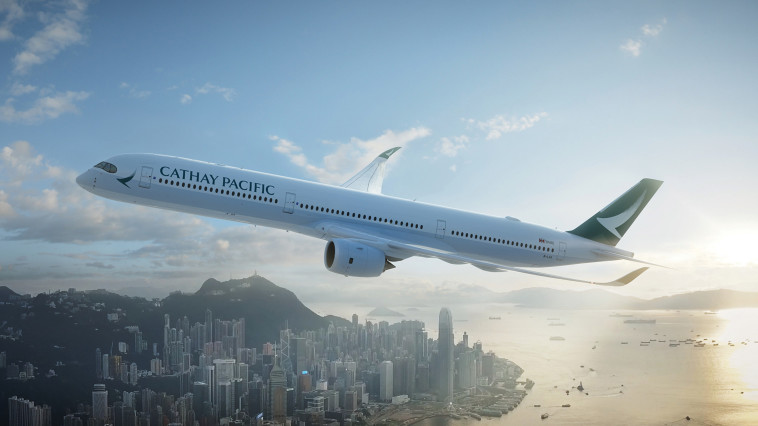
Cathay Pacific, the national airline of Hong Kong, which also operates flights to Israel, takes sustainability very seriously. The company was one of the first to publish an environmental report 25 years ago, the first in Asia to launch a carbon offset program 15 years ago, and the first to make a stock investment in Fulcrum Bioenergy – a sustainable aviation fuel producer, 8 years ago.
Cathay's commitments to protecting the environment include:
A commitment to use 10% of sustainable aviation fuel (SAF) as part of its total fuel consumption by 2030. A commitment to carbon neutrality by 2050. A commitment to remove 50% of single-use plastic utensils by the end of 2022, a goal previously achieved by the airline of a reduction of 56%.
Beyond that, Cathay is happy to share with its customers in efforts for the sake of the environment, through the Fly Greener program in which customers are offered the opportunity to purchase, as part of the cost of the plane ticket, "carbon offsets" that come from projects that reduce or prevent CO2 emissions, such as investing in SAF or projects focused on renewable energy. Since the launch of the program, more than 300,000 tons of CO2 have been offset.
Just this year, Cathay Pacific partnered with State Power Investment Corporation (SPIC) to drive further development of the sustainable aviation fuel (SAF) supply chain in China. SPIC is one of the largest state-owned Chinese energy companies and the company with the largest solar installation capacity in the world.
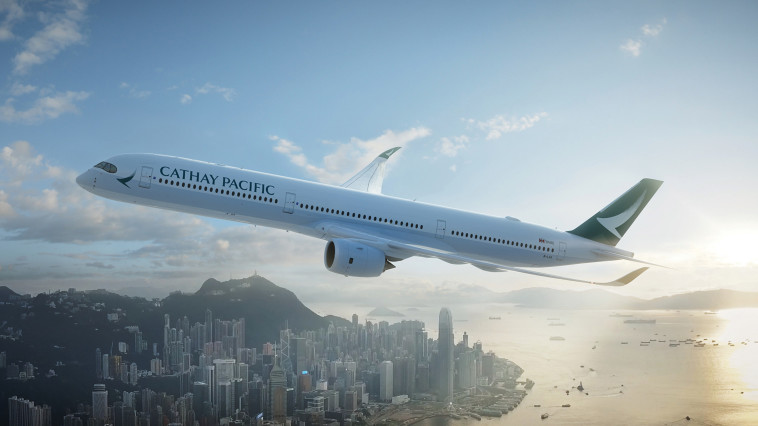 Cathay Pacific (Photo: Cathay Pacific Public Relations)
In recent years, new airplanes are designed to improve fuel efficiency by at least 20-25%, compared to a similar model in the previous generation. This is why, as one of the first Asian airlines to commit to having net zero carbon dioxide emissions by 2050, the company has invested heavily in a new fleet (since 2016, 43 brand new Airbus A350 aircraft have been added to the aircraft fleet, and four brand new A321neo aircraft). This move helped it achieve a constant improvement in fuel efficiency, an improvement of over 20% since 1998.
As the first airline to make an equity investment in sustainable jet fuel producer Fulcrum Bioenergy in 2016, Cathay is now in a position to commit to using 10% SAF as part of its total fuel consumption by 2030. Fulcrum Bioenergy uses in household waste as a nutrient and turns them into SAF. Not only is the resulting transportation fuel low in carbon, the process also helps divert a large volume of waste from entering landfills. SAF produced by Falkrom can reduce greenhouse gas emissions by up to 80% on a life cycle basis.
Cathay Pacific recognizes the impact that single-use plastics have on the environment and in 2019, committed to halve its use of single-use plastics by the end of 2022. By replacing key non-plastic items, the airline achieved a 56% reduction, meaning the removal of nearly 200 million individual items such as plastic cups, salad bowl lids, cutlery and straws on an annual basis.
Her sustainability journey actually began more than 20 years ago in tourist class, when she started using reusable plastic cutlery, which is washed, sterilized (sterilized) and reused many times. In first class and business class, the pillowcases and duvet covers are packed in multi-bags Folds and even the cabin carpets in the company's A350 planes are made from recycled fishing nets.
In conclusion, Cathay Pacific is committed to doing its part in sustainability and climate change. However, this is a crisis that we all need to come together to fight and cannot do alone. The airline recognizes that it requires extensive collaboration with many stakeholders and is committed to achieving its goal of net zero carbon emissions by 2050.
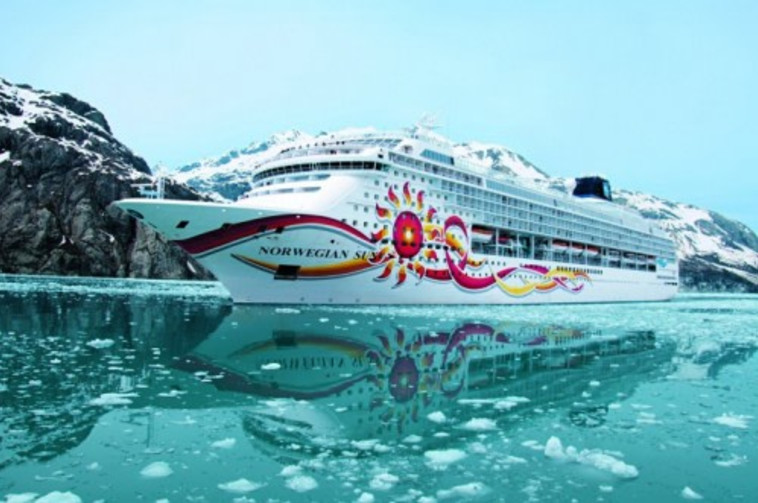 Norwegian Cruise Line (photo: courtesy of NCL)
Sailing and protecting the environment
Norwegian Cruise Line (NCL) has launched its renewed climate action strategy along with short- and near-term greenhouse gas ("GHG") targets to support the company's ambitious goal of net zero by 2050. These actions underscore the company's strong commitment to the – Carbonization as part of its global sustainability program, Sail & Sustain.
Key elements of the company's new interim GHG reduction targets include reducing GHG intensity by 10% by 2026 and 25% by 2030, compared to the 2019 baseline with intensity measured on a capacity day basis. The company focuses on the scheduling efficiency of its existing fleet, which can immediately affect electricity consumption and greenhouse gas emissions, as well as create fuel savings. This includes both ongoing investments in systems and technologies, such as upgrades to air conditioning systems and waste heat recovery systems, and operational improvements, such as smart route planning.
The company innovates long-term solutions and technologies, including those that support the ability to operate on green fuels. Since 2022, the company has successfully completed tests of biofuel mixtures on several ships, in which a mixture of approximately 30% biofuel and 70% marine gas oil was used.
In the longer term, the company sees green methanol as a promising solution, and recently announced the modification of the last two Prima Class ships, which are expected to be delivered in 2027 and 2028, so that they will be suitable for the use of green methanol as an alternative fuel source in the future.