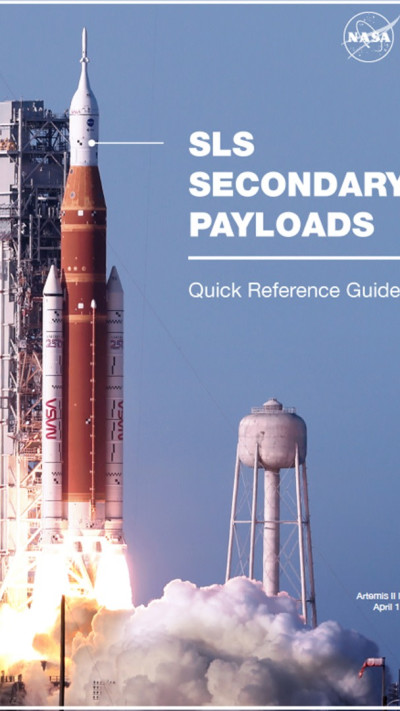

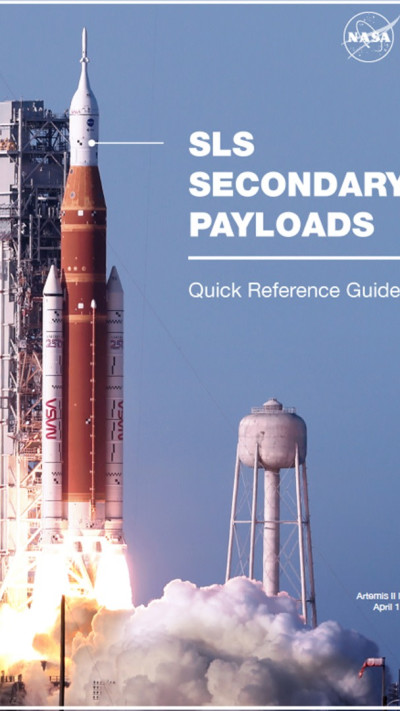
Now, Israeli research and development will be able to be integrated onto 6U and 12U nanosatellites (CubeSats) that will be deployed from the Orion spacecraft in orbits around the Earth, the Moon, or in heliocentric orbits. The new opportunity is based on an expanding strategic partnership between Israel and NASA, the success of Israeli scientific involvement in Artemis 1, and the strategic agreement with NASA signed by Minister Gamliel a few months ago, which anchors the expansion of cooperation in the fields of lunar exploration, space science, space technologies, education, and human capital.
Minister of Innovation, Science and Technology Gila Gamliel: "NASA's invitation is an expression of confidence in Israel's scientific and technological capabilities and evidence of the strength of the scientific alliance between us and the United States. The strategic agreement that I led with NASA opens the door for Israeli researchers and industry to the world's most important space missions, and an opportunity to create international collaborations that will establish Israel's status as a civilian space power. Israel proved with Artemis 1 that it knows how to bring unique knowledge to space, and now a new window of opportunity opens to leave an Israeli mark at the heart of the most ambitious space program of the 21st century."
The Director of the Israel Space Agency, Ran Levena, added: "This is a short-term but highly significant call for ideas. We are looking for mature, precise ideas with clear scientific or technological value that can meet high scientific standards and compete with proposals from all over the world for inclusion in the Artemis mission. For Israeli researchers, universities and companies, this is an opportunity to enter a direct work track with one of the world's major space programs. We call on Israeli academia and industry to dare and dream big. Our proven capabilities in miniaturizing satellites and precise scientific instrumentation are exactly what NASA is looking for."
The call for proposals is intended for the initial characterization phase only, and does not require a final mission definition at this stage. Proposals will be evaluated based on technological maturity, engineering feasibility, scientific and technological contribution, ability to meet integration requirements, and a commitment to publish mission data to the public within six months of mission completion.
The Ministry of Innovation stated: "Israel is no stranger to the Artemis program. Already in the Artemis I mission, Israel presented the groundbreaking experiment (MARE) in collaboration with StemRad and the German Space Agency, which tested the 'Astro-Rad' protective vest on the 'Zohar' and 'Helga' dummies – an experiment that set new standards for radiation protection in deep space."
The current order is a direct result of Israel's signing of the Artemis agreements and the strategic relationships that were forged over the past decade and were re-enforced with the signing of the 10-year agreement (2025-2035) led by Innovation and Science Minister Gila Gamliel in December 2025. The agreement ensures Israel's place in NASA's supply and research chain, and allows access to the world's most prestigious flight infrastructure on a scientific cooperation basis (no-exchange-of-funds).