
More than the precise and glittering event in which the members of Shlomo Sheraf's extensive family surprised the head of the family in honor of his 80th birthday, which falls the day after tomorrow, and to which the best players he trained were invited to play against each other, it was the amount of people – that Sheraf had time to fight with and make up with. Most of them came to pay their respects to him. It wasn't a grand opening of a business that everyone should knock a story into, it was a deep appreciation, and great love, for a coach with a great past and an unrestrained commentator, with a rather big heart, which also holds up very well, without the evil eye.
We are sitting on the patio of his residence in Gan Haim, Moshav Sharoni is blooming and full of chirping birds. The house overlooks an inner courtyard where there are two other houses of different sizes, where his daughter Anat (51) and his youngest son Uri (47) live with their families.
It looks like a luxury villa complex that hosts families on weekends in one of the moshavs near the Lebanese border, only that it is a family complex, authentic, route-oriented, five minutes from Kfar Saba. Sheraf bought it 40 years ago for $149,000, the redemption of the three-room apartment where the family lived in the nearby city – and some savings.
There are six dunams there that include an orchard of fruit trees, another 22 dunams of agricultural land where pecans are grown, and a Friday family dinner attended by three children (including my father, 53, the eldest who lives a few minutes away), 11 grandchildren (two pairs of twins), five dogs and one chef – The head of the tribe. You need excellent physical fitness to do a comprehensive tour of Havilah, but Sheraf is in good shape and knows how to sum up his choice in a winning sentence: "I wouldn't trade it for a luxurious penthouse in Tel Aviv."
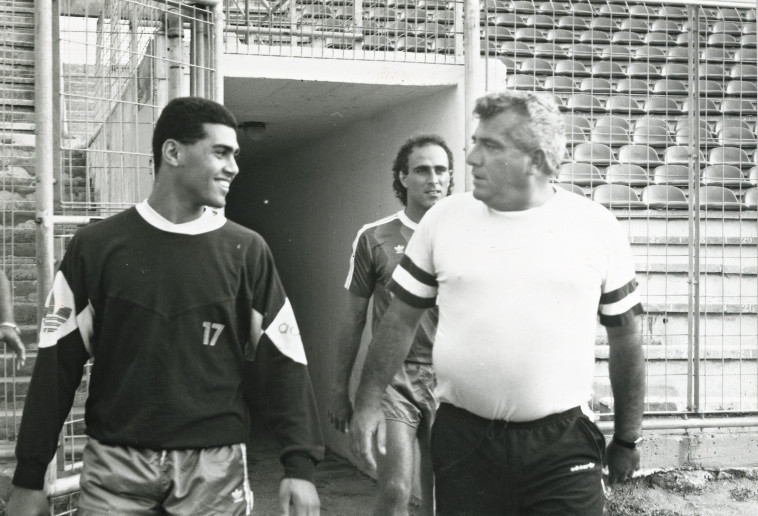
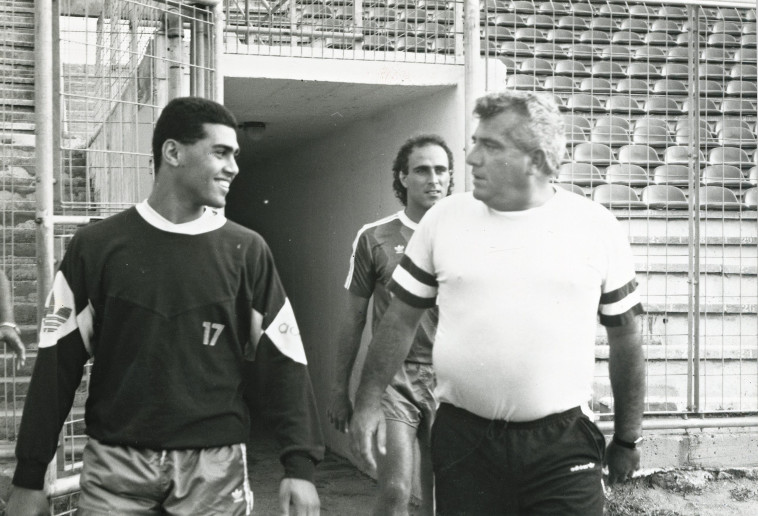 Shlomo Sharaf during his time at Maccabi Haifa (Photo: Herzl Shapira)
The walls of his study are covered with photos, one of Kadishman's sheep and a famous photo painting of Israeli heroes from Moshe Dayan's time as Chief of Staff. Rio, a poodle who is a storyteller, with a rural joy of life, runs between his legs and the owner of the house goes crazy. "The more people I know, the more people ", he told us, "I like dogs more".
The day before our meeting, Seraf encrypted for Kiryat Shmona for the umpteenth time this game season. He is a commentator on the sports channel, but he is the commentator who always travels the farthest, at an age when others hardly move to the nearest hospital. "I go to Kiryat Shmona once every three weeks," he does the math.
"it's fun. Is there anything better than traveling? We don't go straight to the game. We travel earlier, once we enter Hamat Geder, bathe in sulfur water, go to eat fish in Tiberias. Each time a different restaurant, we are already known everywhere, they send us orders. There is, for example, shawarma in Ilavon that we always pass through to Kiryat Shmona."
I don't know many people in their 80s who travel that far to work.
"I don't drive, it's a taxi. Apart from that, they talk, and laugh, and stop. Traveling today to Kiryat Shmona is easier than traveling to Haifa. We are also always ahead of the traffic jams. If the game is at seven, we go out at half past two. And besides, what am I going to do, I'm going to sit at home? This is how I travel, spend a day, travel, watch a game and I love it."
But people your age rest, you are 80 years old.
"If I rest, I won't be able to walk, I won't remember."
You don't need the money, what's more it's not money.
"It's fun for me. I see the people who don't work and sit at home, and I think I'm healthier and it keeps me alert. The brain is still working, and I need to see and remember. I can see well, imagine that I am still reading a newspaper without glasses."
The people who accompanied you professionally no longer hang out with you. You are among young people, another world. People who don't know who Pele is, haven't seen Maradona or Eyal Berkovic live. There is an era of political correctness, people today speak as if they were at a conference of vegans, not like in the agricultural colony of the 1950s.
"Not feeling it. I get good responses that people like what I do. It's worth it all. It's not something I do out of pressure because I have to, I do it for love, I do it for fun. I'm fine, I'm comfortable."
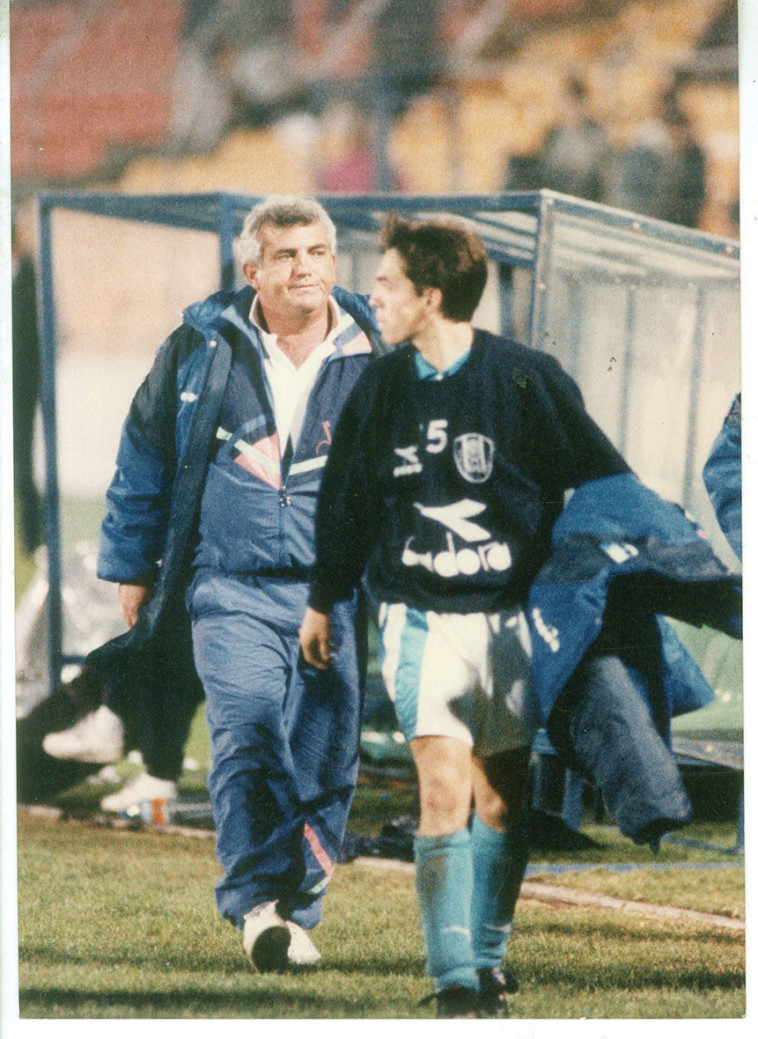 Shlomo Sharaf and Eyal Berkovich (Photo: Adi Avishi)
Must say, resin is unusual. His contemporaries got off the stage. Dror Kashtan, the most decorated coach in football history, almost two years younger than him, took asceticism far, and his appearances are rare; Eli Cohen, 72, does not approach the commentator's chair; Avraham Grant, soon to be 68, trains intermittently for anthropological challenges and is hardly remembered. Sharaf is a commentator, there is a puppet in his character in "Puppet of Lila", he gets criticism, people talk about him, and this even though he has not been a coach for 20 years, retired at a relatively young age.
"I determine my destiny," he concludes. "I have always determined my destiny, my way of life. With my ten fingers I built everything that is here. To this day I cook, go shopping, carry the baskets with the meat and fish and vegetables. On Friday you will be Here is a meal for 20 or so people that I cooked. I am active.
As long as my legs carry me and I can, I want to work. I was never an idler, I always worked in more than one place, I always did many things together. I remember that I used to bring four or five salaries home when I was after the army. All my life I've been at work, I've never been a parasite. I played soccer and at the same time I was deputy maintenance manager in a large factory, training the children-boys-youth and at night I had a disco on the roof of my father's cafe.
I would go to the army with a car, when nobody had a car. At the age of 18 I already had an Opel Record, everyone would go crazy for me. I can't see parasites sitting at home and not going to work. This is how I raised all my children. I enjoyed what I did. When I finished working at the factory, I had Borax, and a sports store with Shum (Yitzhak Shum, today the owner of Hapoel Kfar Saba – RA), I dabbled in real estate here and there."
He burned with nostalgia and self-loathing: "If I were allowed to be reborn again, I would choose the same way of life, the same path I followed. Everyone wants to make it to the national team, but not everyone does. And wherever I was, they wanted me to come back. The only place where I was fired was at Maccabi Tel Aviv. I am the only coach in the world who fired him without losing a single game. No league, no cup, no friendly. It left a stain on me."
How much does football occupy you today, how much do you spend preparing for the broadcast?
"Sometimes a whole day. I sit on the Internet, read, prepare for the game, call the coaches, talk to players. I am 100 percent in control of the Internet, reading what interests me, not just sports. I am also interested in what is happening in the country, and I am very sorry for what is happening in the country. I never imagined that I would reach this age and see my country in this way."
What's going on?
"Deterioration, don't you see deterioration? Look who should give us an example in this country, does it seem normal to you, that this is the State of Israel? Is this what we dreamed of when we were in the youth movements? I see a disaster here. I don't see that there is a resurgence here, I don't see that the country can survive for a long time in this way. It's a real shame."
from what?
"From everything, from how this country is run. Can there be a prime minister who is accused and continues as if nothing happened? In a normal situation he cannot be a bus driver. And look what kind of government is going to be formed: ministers who did not serve in the army, who evaded the army, should they set an example for the youth here?"
They will say that in the last year and a half there was a government whose first prime minister represented a party of six Knesset members.
"But he was not charged with crimes. I don't want to get into it, but I can tell you in general: this is not the country I thought I would end my life in."
Sharaf was born in Siberia in the middle of World War II. His parents fled east from the inferno in Poland. On the day he was born, January 1, 1943, a freezing cold prevailed. He immigrated to Eretz before the age of 6: "I remember the journey by ship from Marseille. In those days, two ships transported the immigrants to Israel: 'Aztmaut' and 'Herzl'. We went up with 'Independence'. I remember the turbulence in the sea.
They put us in an immigrant camp in Pardes Hana, an old British army camp with these round bins. We lived in tents for a good few months. In the winter the wind would blow the tents away, and the blankets were large, and would hang from the folding beds of the army, absorbing the water. In the morning we would get up all wet. But then no one had one, it's not like today when immigrants immigrate and get a house."
What did Kfar Saba look like in the 1950s?
"I remember that on Weizman Street there were horse-drawn carts, there were no cars, there was a dirt road. I remember the first private in Kfar Saba, owned by a man named Motel'a Krakower. Who did he have?"
Sharaf played football in Hapoel Kfar Saba. His statistics are not bad: 60 league and cup goals, among the ten greatest scorers in the club's history: "I was an excellent player, number 10 on the back, with an unusual technique. I was very aggressive, I was not easily passed. I was a combination of Tal Benin and Eyal Berkovic, Eyal's technique and Benin's aggressiveness. Knows how to extract bullets, fighter."
There are very few coaches who have brought their character as players into their coaching. You were a creative player whose teams you coached were creative, bordering on adventurous.
"When I coached Maccabi Haifa, I was told that Reuven Atar and Eyal Berkovic could not play together. I proved they can. The problem is with bad players, but good players can play together. I told them: 'If you don't learn to play together, you will hang on the tree together.'"
Which players would not have come to anything if it weren't for you?
"I will tell you one story and that will be enough. When I came to Maccabi Haifa, Jack Mansell was in front of me. He didn't appreciate Ronnie Rosenthal. The then chairman, Zvika Weitzner, sat with me and told me that for next season he would bring Hillel Kaplan from Beit Shan in exchange for Rosenthal. I told him not to transfer anyone, that I was taking them both to a training camp in Shenk in Germany and there I would decide who stays and who goes.
We went to Shank, I see Rosenthal: a piece of body, fast, with intelligence, speaks languages and I see Hillel Kaplan. Already at the camp I decided that Ronnie Rosenthal would stay and Kaplan would return to Beit Shean. In my second season in Haifa, we hosted Kiryat Haim. Israel Maoz, a car electrician from Bruges, who decided to become an actor's agent, comes to me.
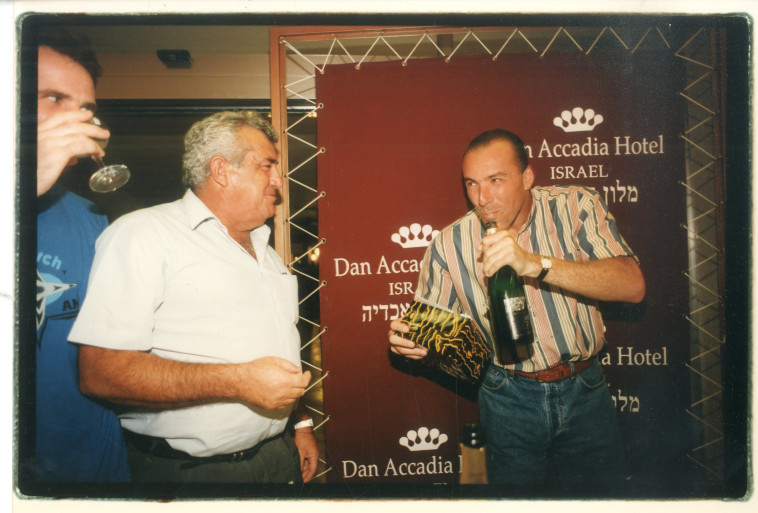 Shlomo Sharaf and Roni Rosenthal (Photo: Ben Oskar)
He comes to me and says: 'I have good relations in Bruz.' I can take one player from here to there. Recommend me. I didn't think twice and told him: Roni Rosenthal. Stupefied: 'Why not Maman, why not Armali?' I explained to him: 'In terms of his data, Rosenthal is more suitable to be a professional than anyone else. He will go there and not look for hummus and have his mother make him couscous.'
Think that if Shlomo Sharaf doesn't come to Haifa that year, Ronnie Rosenthal goes to Beit Shan and retires at the age of 22. It's a player's luck that I arrived at the right time, at the right club, and put him on the map. Eyal Berkovich wrote in his book that if Shlomo Sharaf had not trained him, he would not have achieved anything. I'm not talking to you about the elves I raised, but about the seniors.
I didn't miss a player. Everyone says that I had the eye to choose actors, to distinguish between who is good and who is not good. I took Ronen Harazi from the second league, when he was attached to Benitez from the motorcycle accident he had, and I gave him the stage in the national team. Uri Luzon from Tel Mond, Adir Shamir from Hapoel Ra'anana, whom I brought to Hapoel Kfar Saba through Bnei Yehuda, I brought Aryeh Habib from the handball, I found Eli Yani on the street in Takuma neighborhood."
With all due respect to the choice of players, Sharaf's move to Maccabi Haifa was the most dramatic in his career. Until the arrival of Sharaf, Maccabi Haifa was not even the top team in Haifa, with one title, the State Cup, won when Sharaf was still a soldier. With him she won three championships, the state cup, and above all bit the hegemony of the majors until then.
"Maccabi Haifa has always been in the shadows," says Sharaf and sails into a chewy story that basically tells everything: "Maccabi Haifa was a hero until her room. She would pass her room, lose her confidence. We once came to play against Maccabi Tel Aviv. I sit in the first bench on the bus, and behind me sit Avraham Avokert and Eitan Aharoni The Maccabi Tel Aviv bus arrives in front of us and we are behind.
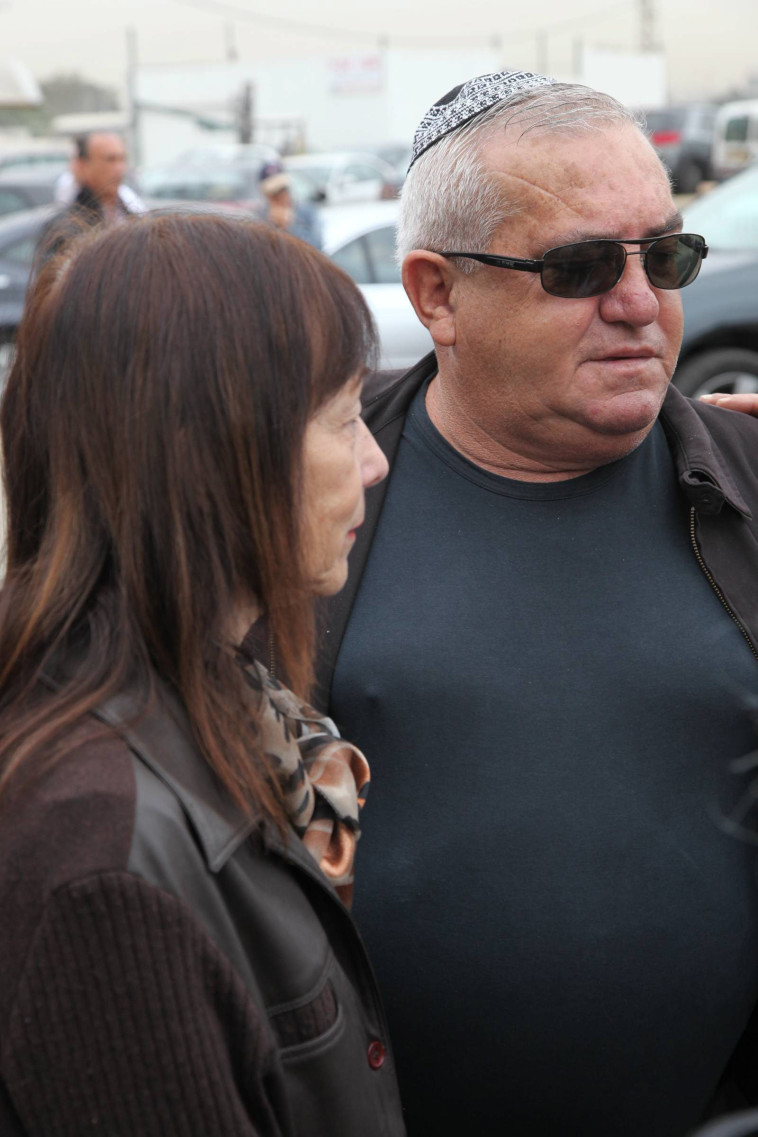 Shlomo and Leah Sharaf (Photo: Noor Rahav)
Vicky Peretz gets off the Maccabi Tel Aviv bus. Amed (Avokart – RA) says: 'Look, look, look, here's Vicky'. Do you understand? He's going to play against Vicky Peretz and is excited to see him. I turn to him: 'Kibinimet, maybe you'll also come down to take a picture with him?' There was the mentality of Maccabi Haifa. For them, Maccabi Tel Aviv was something else, until I got it into their heads that they were better.
I changed their worldview. They would have a party every year and hand out trophies to each other: Weitzner to Shmetnik, Shmetnik to Freddie, and they would jump into the pool for joy because they stayed in the league. They had no other goals. But they also put landmines in my path."
which?
"They were used to Baruch Maman and Yaron Parslani deciding who would play, what they would eat, when they would train. One day we are playing against Carmel Castle in a training game, and Praslani makes me a spare move. I was sure he wanted to change. I told him to come, but he tells me that he doesn't want to be replaced, but that someone else needs to be replaced. I told him to get out immediately.
I cleaned Maccabi Haifa. Imagine we arrive at the training camp in Shenk, I tell them they should go for a lunch break. Suddenly I see a taxi that stops in front of the hotel and on the roof spoilers and BMW rims. Zion Merili and Eitan Aharoni went to buy spare parts in the city without telling me. I told them to pack their bags and go home. In the end they convinced me that they would stay. Do you know what I went through? Do you know how many times I've called my bosses and said I can't do it anymore? Until I managed to make a soccer team."
You won a double over Hapoel Petah Tikva and Abraham Grant, the rising coach, which was good of you.
"I don't think they were better than us, by any means. I sat with Grant and jokingly told him: 'Let's split up. Take either the cup or the championship'. He told me no, that he wanted both degrees. I told him not to be a pig and God helped and really he won nothing. In the cup final, he prepared Guy Gat to dismantle Eyal Berkovic.
He literally gave him an order to walk on his feet. He stayed with ten players, he did nonsense in this game, Abram."
If they take a poll on who is the best coach of all time, there is a chance that the choice will be between Grant and Barak Bacher. They will say about Grant that he did a national team campaign without losing, that he coached Chelsea in the Champions League final, that he coached around the world.
"Do you really think I care who the best coach is? It's not a degree you live off of. Everyone has their own opinion. Grant doesn't upset me anymore, because I'm done with him. But there were times when he upset me, because in my opinion, he and my father Nemani were the causes of my dismissal from Maccabi Tel Aviv. It's a stain I remember more than whether I'm the best coach of all time or not."
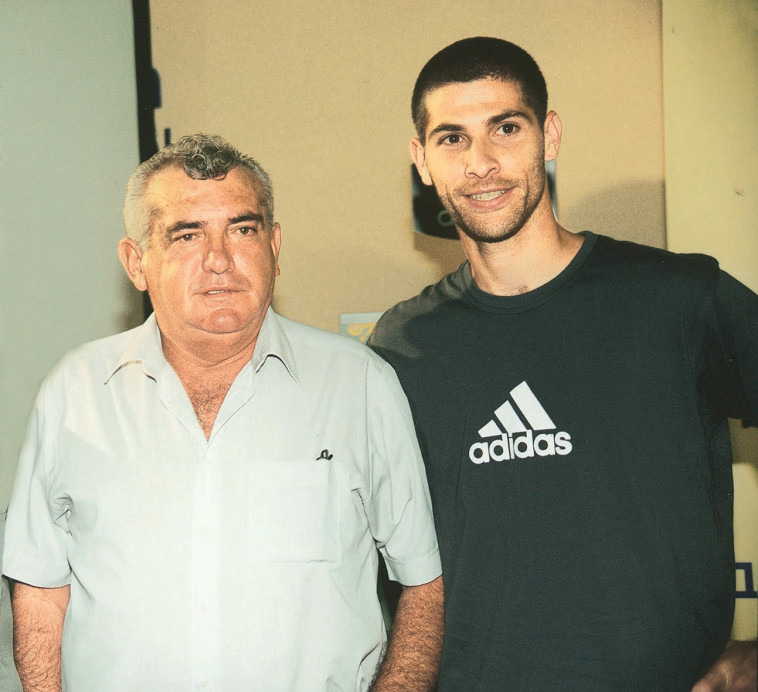 Shlomo Sharaf and Avi Namani (Photo: Danny Maron)
You were in the national team for eight years, but do you know what you remember? The fact that with the wonderful generation of players you had at your disposal you did not advance to any major tournament, and the affair of the escort girls.
"I don't think that only the escort girls are remembered, because you know yourself that this is a team that behaved exemplary. Escorts were in the past, are today, and will be in the future. Football will always be associated with escort girls, beauty queens and models. I can't be a major, sleep in a hotel on the 20th floor and on the first floor there are players who in their free time go with escort girls. I know that in my team, these players brought a lot of respect to Israeli football and behaved in an exemplary manner. To this day, I don't know who was there and what they did there." .
With the team you won in 1993 in France 2-3 a team that was bigger than you by several numbers, when a few hours before the game some of the players lingered in the Champs-Elysees buying a radio disc with a changer, so much so that he ran several kilometers on wet streets to the hotel to make it to the meeting . This is Israeli football, taking a successful day when you didn't prepare for it at all?
"It was the first time in my life as a coach that before the game I let the players go out to the city, to do some shopping. You think I thought we'd beat France? No, but there was such tension that I wanted to let them fall apart. The national team in my time brought a lot of respect to football, there were full stadiums. To this day, people meet me and say there is nothing like my time.
The team played open football, to win. The national teams back then were much better than today's, we always ran into difficult teams. The team today gets such houses that I tell you that our team back then would have won the games today in a walk. They keep telling me: 'You had it'. What was it to me? I made all these players in the youth and Olympic team. I raised a whole generation to graduates. I replaced a generation of Chinese and Malmilian."
You didn't always get along with stars, for example Eli Ohana.
"He said in some interview that he must surely be a team player in the national team. I said of course not and took it out. Then Moshe Dadash intervened. I'm allowed to change my mind."
Are you allowed to be wrong?
"I am allowed to make mistakes. I may have been wrong."
To say in a television interview about goalkeeper Rafi Cohen in the tunnel through which you go to the dressing room, that he finished his career with the national team, is that not a mistake?
"I don't think it's a mistake. After he gets a goal from 40 dunams from Hiero, Vachebria, the shortest player on the field, hits him from the five-point line, and I lose to Spain and don't go to the Euros, so I was angry. So I said, Sue Wat? I brought Rafi Cohen from Eilat to the national team, I gave him the stage. He owes his entire career to Shlomo Sheraf. The whole newspaper will not be enough if I give you the list of the players I built and made. I'm allowed to say that another goalkeeper will stand."
Alon Mizrahi said that no player from today can enter the 11 that started 0-5 against Austria, not even Eran Zahavi.
"This, he has sayings, be healthy. There is no doubt that the 0-5 was a football school. I can watch this game 20 times a month. When you want to teach football, this is the game. You talk and you enjoy it, a once in a life game. In the form he was a year ago, not today, Eran Zahavi entered the team of that time. Can you give up on a player like that? This is a player whose leg was touched by the hand of God.
I built this generation. All the journalists talk about 'he had it'. what are you talking about? How many years have passed, 23 years? What have we done since then? Not what I did then, ask what we have done since then. Even the French team I played against is two levels better than today's French team."
A lot of people always messed with what Sharaf said. "Ben Tibuga", "Vegetable carrier", "Parasite", "You might think you work in the Tory", "The Israel national team is like a bride on her wedding day, everyone knows she is going to receive, but they don't know how much", these were his phrases, his identity Once, when I asked him about the review, he replied that "any journalist who has a pen worth a shekel and a half, can write whatever he wants". to the ass". And this also entered the newspaper.
You failed the age of political correctness. Today it would not go quietly.
"Maybe at this time I am not suitable to be a coach. You have better coaches today."
Now you're being cynical.
"Obviously. Shame and shame on today's coaches. I can't choose on one hand three coaches that I appreciate in football, who built something, who did something. Are the coaches' statements better today? It's better to tell the truth inside, like I said."
You sit as a TV commentator and trip over your tongue.
"What falls, that suspended me? Did I say about a player who will go eat a banana? What happened? What, you don't eat bananas, I don't eat bananas? When I was a national team coach, we were offered to come to Panama and play. So I researched Panama and got interested, and I was told that Panama is the number one exporter of bananas in the world. And when they told me that the player was from Panama, I remembered that, and said he should go eat bananas. I swear to you, I was visited, nothing went through my mind."
Only recently the fans of Hapoel Umm al-Fahm were angry with you because you called them "animals" on the broadcast.
"When the Beitar Jerusalem fans rioted, I said that they were human animals and that severe measures should be taken against them. When Ogbona motioned to me with his hand to make a knife motion that should cut my throat, I said that he should be put in a cage and sent back to Africa. If I'm lying, I won't get up in the morning. I Am I a racist? My best friends are from the Arab sector. The owner of Umm Al-Fahm also invited me after the game to Hafla in the city."
Do you happen to be careful with your speech now, think twice?
"I don't think about it at all. I say what I want to say. I received warnings from here until further notice, but I have no intention of harming anyone. When I see a crowd throwing blocks onto the field, my job is also to educate. This is the behavior of a wild man."
During our conversation, he receives a call from his lawyer. There is an attempt to conciliate him towards Eric Izikovich, the owner of the Beitar Tobruk youth club. Sharaf has served him in a variety of positions and now they are in conflict. Sharaf rejects the proposal of reconciliation. Sharaf has had high-profile conflicts in the past, with most of which he reconciled. Some of the conflicted people respected his presence, and even Beyond that, the surprise event in his honor. Conspicuous by his absence from the event was his right-hand man and business partner, Yitzhak Shum. "Shum decided to travel with his wife to Athens, it's his business," Borer carefully burnished his words.
But what happened between you?
"We've grown up, everyone has their own things, it's not what it used to be. There are no close relations. It may have started with the firing of Masai Dago in Hapoel Kfar Saba (four years ago – RA). I was with Shum together in Kfar Saba. I told him that he should not be fired, and he decided to fire him. I told him that if he fired him, I could not continue with him Apparently it didn't interest him. I was surprised that he didn't come to the event, but he's a big boy. Basically, I have nothing against him."
did you hurt
"The truth is that I was at such a high level of excitement that I didn't feel his lack. A month ago he knew that an event was being held for me. Garlic is a part of me, and he did have to come. He's been to Athens dozens of times, but when you do an event like this once, he had to think, but apparently I'm not important enough for him."
Sheraf's retirement from coaching freed up Bashlan Shlima for us. "I cooked back when Leah was alive, and she really appreciated what I was doing. She was proud of my cooking," he says.
how did you learn it
"Just, by myself. My parents had a restaurant, and I remember myself as a young boy helping my mother in the kitchen, peeling potatoes. I didn't think then that I would cook like I do today. Forget the 'Master Chef' that I participated in, I cook today in all styles and for all denominations. Moroccan and Thai and Eastern European food and fish of all kinds."
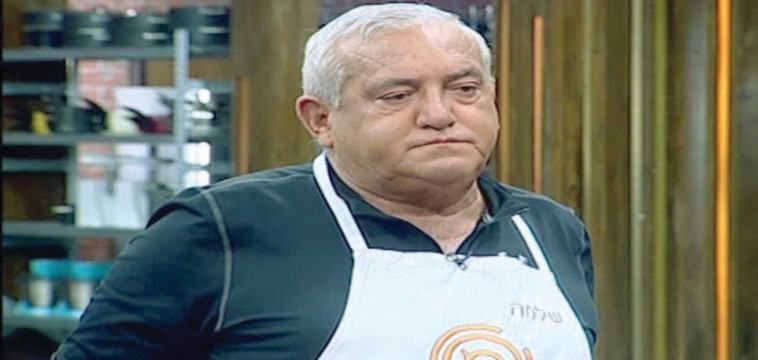 Shlomo Sharaf in "Master Chef" (Photo: Keshet 12)
 What is the menu for Friday?
"Spicy fish patties, meat patties with eggplant sauce and tomato juice for a first course. For the children I make chicken soup that I break up the chicken in the soup, with noodles. Because it's already winter, I make goulash with mashed potatoes and rice. They like chicken that I put in the oven for five to six hours, and the meat falls off the bone. And at the end I make them fruit soup from the trees. Oranges and lychees and pomegranates. There are also cakes and coffee and tea and ice cream. 50 people can eat and there will be plenty left over."
Could it be that if you weren't a football coach, you would be a chef?
"I think I was a building contractor. I would do construction, I love it. pick something up off the ground."
It's amazing that you retired from coaching at the age of 58, a relatively young age, but you didn't leave the field.
"Apparently there is something in the fact that after you coach a national team, it is very difficult for you to return to coaching. The slap I received from Maccabi Tel Aviv – I had two heart attacks afterwards – I was very hurt. When I sit with Lonnie Hartsikovich, the owner of Maccabi Tel Aviv, and tell him: 'If I don't make a championship, I won't say I'm building a team, I'll go home alone. Let me finish the season, I will do what you dream of'. He tells me: 'The train has reached the end of its journey.'"
what did you feel
"I decided at that moment that I was done with football. I went to the media and made a difference."
The host of Sharaf's surprise event was Yonatan Cohen, broadcaster of the Sports Channel, Sharaf's partner for broadcasts and culinary journeys throughout the country. The mention of his name makes Sharaf's eyes sparkle: "This is a rare guy. His knowledge, his style of speaking, I am fascinated by him. Brilliant guy, a walking encyclopedia. I really like him. The respect he has for me, his behavior towards me.
This is not a given. He tells me: 'What you see, no one sees.' I'm flattered. He also likes the topic of the kitchen, understands food, eats at my place, he enjoys it and I enjoy it. He is from the next generation of broadcasters after Yoram Arbel and Rami Weitz."
Where will you be in ten years?
"First let me live another ten years. At my age, sometimes you go to sleep and never wake up."
Is there a day when you say enough is enough?
"Definitely. The day I feel for the first time that I do not see well, or do not control what is done on the field, and do not remember the name of the player, or do not see his number, I will not sin against myself. I will approach Tomer Turgeman (CEO of the Sports Channel – RA). To his credit, he told me that I will decide when I retire, not them. I will not make fun of myself. My self respect is more important than anything. If I feel that I am not complete anymore, I will say thank you very much. In the meantime, everything is fine."
How would you word the first two sentences of your Wikipedia entry?
"After 'Master Chef' they discovered me a little. The truth is that I am not talking about what I do for the community, hospitals, the foundation named after my wife. People know how to cherish it. I have never returned a man's hand empty handed. I will be remembered as stiff, perhaps excessively blunt, but with the heart of a sweet challah."